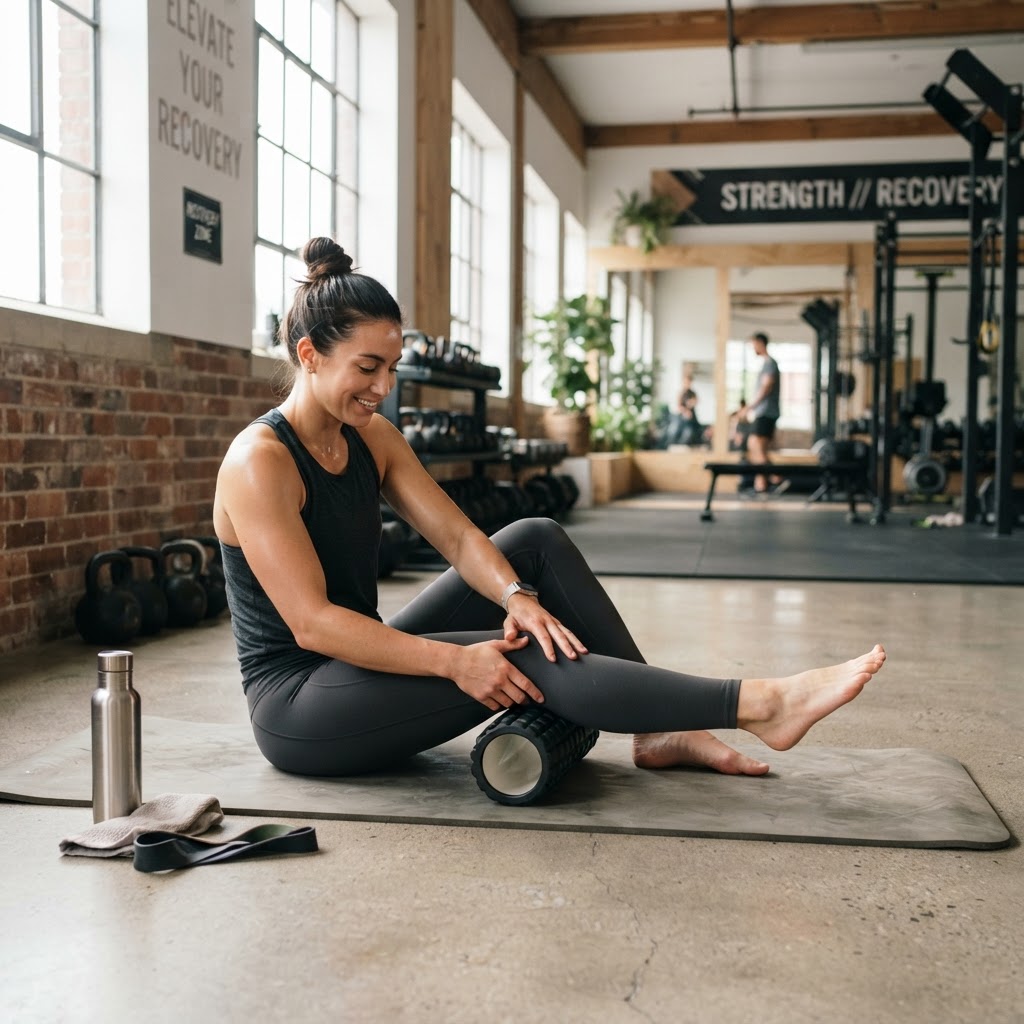
The Search for the Perfect Recovery Tool
At Clarence Park Health Suite, we often see members finishing a tough session and heading straight for the foam rollers. It is a common sight in any gym, but it usually comes with a debate: 'Should I use the smooth roller, the grooved one, or the really hard, serrated one?'
For years, the fitness industry has marketed various textures and densities as 'game-changers' for muscle recovery. However, recent scientific research suggests we might be overcomplicating things. If you are looking to reduce Delayed Onset Muscle Soreness (DOMS) and get back to your next session feeling refreshed, the secret isn't in the tool—it is in the clock.
What the Science Says
A 2024 study published in Scientific Reports took a deep dive into this exact question. Researchers wanted to see if the texture or hardness of a foam roller actually changed how quickly muscles recovered after intense anaerobic exercise. They tested three different types of rollers—smooth/soft, grooved/mid-density, and serrated/hard—against a control group that did nothing but passive rest.
The results were eye-opening. While all the rolling groups showed better recovery outcomes compared to those who did nothing, the specific type of roller used made no significant difference. Whether you chose the softest roller or the most aggressive, serrated one, the physiological benefit was essentially the same.
The 120-Second Threshold
If the tool doesn't matter, what does? The study identified a clear 'minimum effective dose' for self-myofascial release: 120 seconds.
To see a meaningful reduction in muscle soreness and an improvement in your recovery rate, you need to commit to at least two minutes of rolling per muscle group. This duration appears to be the threshold where the body begins to effectively counteract the acute effects of intense training.
Practical Application for Your Gym Routine
Here at the gym, we want you to get the most out of your membership. Instead of spending your post-workout time debating which roller to pick, follow these simple steps to optimize your recovery:
- Stop Overthinking the Gear: Use whatever roller is available. If the smooth one is free, take it. If the hard one is free, take that. Your muscles will respond to the pressure regardless of the pattern on the surface.
- Set a Timer: It is easy to roll for 30 seconds, feel a bit of relief, and move on. To hit that 120-second mark, use your phone or the gym clock. Two minutes per muscle group might feel long, but it is the key to the recovery benefits you are looking for.
- Focus on Consistency: Recovery is a process, not a quick fix. By dedicating those two minutes to your major muscle groups after your training, you are giving your body the best chance to repair and prepare for your next visit.
A Note on Personal Training
If you are unsure about which areas to target or how to apply the right amount of pressure, our personal training team is always on hand to help. We can show you how to integrate this 120-second protocol into your individual routine, ensuring you leave the gym feeling as good as possible.
Remember, recovery is just as important as the work you put in on the weights. Keep it simple, keep it consistent, and hit that two-minute mark.