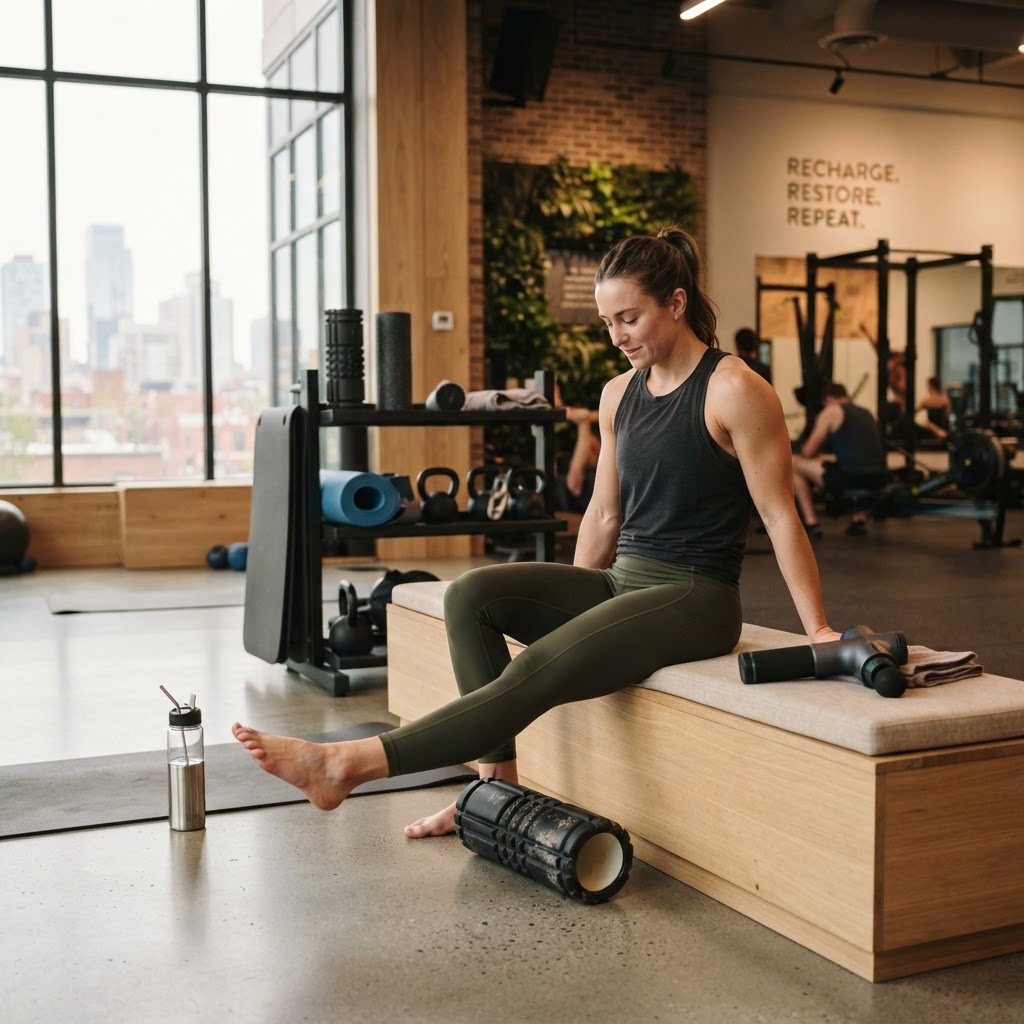
The Recovery Evolution
At Clarence Park Health Suite, we often see members finish a tough session and immediately reach for the same recovery tool—whether it’s a foam roller, a cold shower, or a protein shake. While consistency is key to your fitness goals, your body’s physiological needs change significantly in the days following a strenuous workout. Recent research suggests that recovery isn't a static event; it is a dynamic process that requires a phase-specific approach to be truly effective.
The 0–24 Hour Phase: Controlling the Inflammation
Immediately after a challenging weight training session, your muscles are in a state of acute stress. The primary goal during this first 24-hour window is to manage the initial inflammatory response and mitigate the onset of Delayed Onset Muscle Soreness (DOMS).
According to a 2025 study published in Frontiers in Physiology, cold-water immersion (CWI) is most effective during this acute phase [7]. By keeping the water temperature moderate—around 15°C—you can help control early-phase inflammation without completely blunting the signals your body needs to build muscle [5, 7]. If you are training with a personal trainer, ask them about integrating a brief, controlled cool-down to help transition your nervous system from 'fight or flight' to 'rest and digest.'
The 24–48 Hour Phase: Promoting Tissue Repair
As you move into the second day, the focus shifts from inflammation control to tissue repair and pain management. This is where manual techniques shine. Research indicates that massage therapy is particularly effective during this window for reducing markers like creatine kinase (CK) and interleukin-6 (IL-6), which are associated with muscle damage [7].
If you don't have access to a professional massage, this is the perfect time to utilize the gym’s floor space for targeted, gentle movement. While active recovery shouldn't be another workout, light, low-intensity movement can help improve blood flow to the affected areas, assisting in the removal of metabolic waste products [9].
The 48–72 Hour Phase: Functional Reconstruction
By the third day, your body is deep into the reconstruction phase. The goal here is to restore full range of motion and prepare your neuromuscular system for your next session. A study in Frontiers in Physiology suggests that integrating static stretching with light massage during this 48–72 hour window can optimize neuromuscular recovery [7].
At this stage, your body is often ready for more than just passive rest. If you are feeling stiff, focus on gentle, controlled stretches that target the specific muscle groups you trained. This isn't about forcing flexibility; it’s about signaling to your nervous system that the muscles are safe to return to their full functional length.
Practical Takeaways for Your Routine
Recovery doesn't have to be complicated, but it should be strategic. Here is how you can apply this phase-specific approach at our gym:
- Day 1 (The Inflammation Phase): Prioritize hydration and consider a cool shower or a light, low-intensity walk to help your body settle after a heavy lifting session.
- Day 2 (The Repair Phase): Focus on quality sleep and gentle, rhythmic movement. If you have a 1-to-1 personal training session, use this time to focus on mobility work rather than high-intensity output.
- Day 3 (The Reconstruction Phase): Incorporate static stretching and ensure your protein intake remains consistent to support the final stages of muscle protein synthesis [3].
Remember, the most effective recovery tool is often the one that matches your body's current state. By aligning your recovery habits with the 72-hour timeline, you can reduce soreness, improve your performance in the gym, and stay consistent with your training for the long haul. If you are ever unsure about how to structure your recovery days, our team is always available to discuss how to balance your individual gym access with the rest your body deserves.