The Great Debate: Muscle vs. Movement
If you have spent any time on the gym floor here at Clarence Park Health Suite, you have likely heard the term 'mind-muscle connection' (MMC). It is a staple of bodybuilding culture—the idea that by consciously visualizing and directing neural drive to a specific muscle, you can force it to work harder and grow faster. But does the science hold up, or are you just making your workout harder than it needs to be?
Recent research suggests that the answer depends entirely on your goal. As we navigate the nuances of resistance training, it is helpful to distinguish between two types of attentional focus: Internal Focus (thinking about the muscle) and External Focus (thinking about the movement or the object you are moving).
The Case for External Focus
For decades, researchers like Wulf have demonstrated that in over 90% of motor learning studies, an external focus leads to superior performance [3]. When you focus on the movement—such as 'pushing the bar away' during a bench press or 'driving the floor away' during a squat—your body naturally finds a more economical way to perform the task [1, 3].
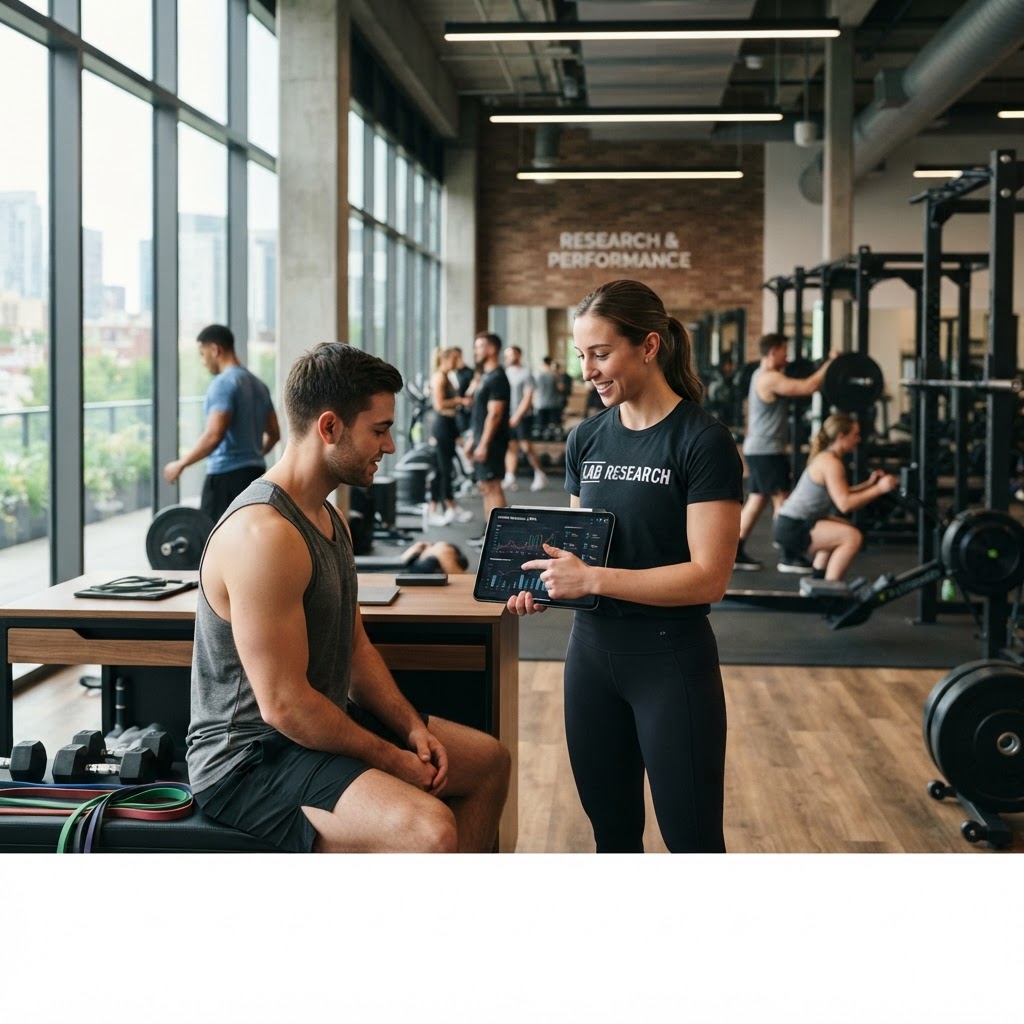
By focusing externally, you reduce unnecessary muscular activity and allow your nervous system to coordinate the lift more efficiently [1, 6]. This is why, if you are working with a personal trainer to hit a new personal best on a heavy lift, they will often give you cues like 'drive the weight up' rather than 'squeeze your chest.'
When the Mind-Muscle Connection Wins
However, the 'mind-muscle connection' is not just a myth. A 2026 study by Kim et al. found that directing attention toward a specific muscle during machine-based exercises can indeed increase electromyographic (EMG) activity in that target muscle [7].
If your primary goal is hypertrophy (muscle growth) rather than pure strength, this internal focus can be a valuable tool. By mentally isolating a muscle, you may be able to ensure that the target area is doing the lion's share of the work, especially during isolation exercises or when using machines where stability is already provided [7].
Practical Application for Your Workouts
So, how do you apply this to your training at our gym? Here is a simple framework to help you decide which focus to use:
- For Heavy Compound Lifts (Squats, Deadlifts, Bench Press): Prioritize an External Focus. Think about the path of the bar or the movement of your body through space. This will help you lift more weight safely and efficiently [6].
- For Isolation or Accessory Work (Bicep Curls, Leg Extensions, Lateral Raises): Feel free to use an Internal Focus. Since these movements are less complex, focusing on the 'squeeze' and the contraction of the target muscle can help you maximize the stimulus in that specific area [7].
- The Load Threshold: Keep in mind that as the weight gets heavier (approaching 80% of your maximum), the benefits of an internal focus tend to diminish [6]. When the intensity is high, your body needs to focus on the movement to survive the set!
Finding Your Balance
At Clarence Park Health Suite, we believe that the best training approach is one that is tailored to your specific needs. Whether you are looking to build muscle or improve your functional strength, understanding how your brain directs your muscles is a powerful tool.
If you are unsure how to apply these cues to your current routine, our personal training services are designed to help you refine your technique and optimize your focus. Sometimes, a small shift in where you place your attention is all it takes to turn a good workout into a great one.