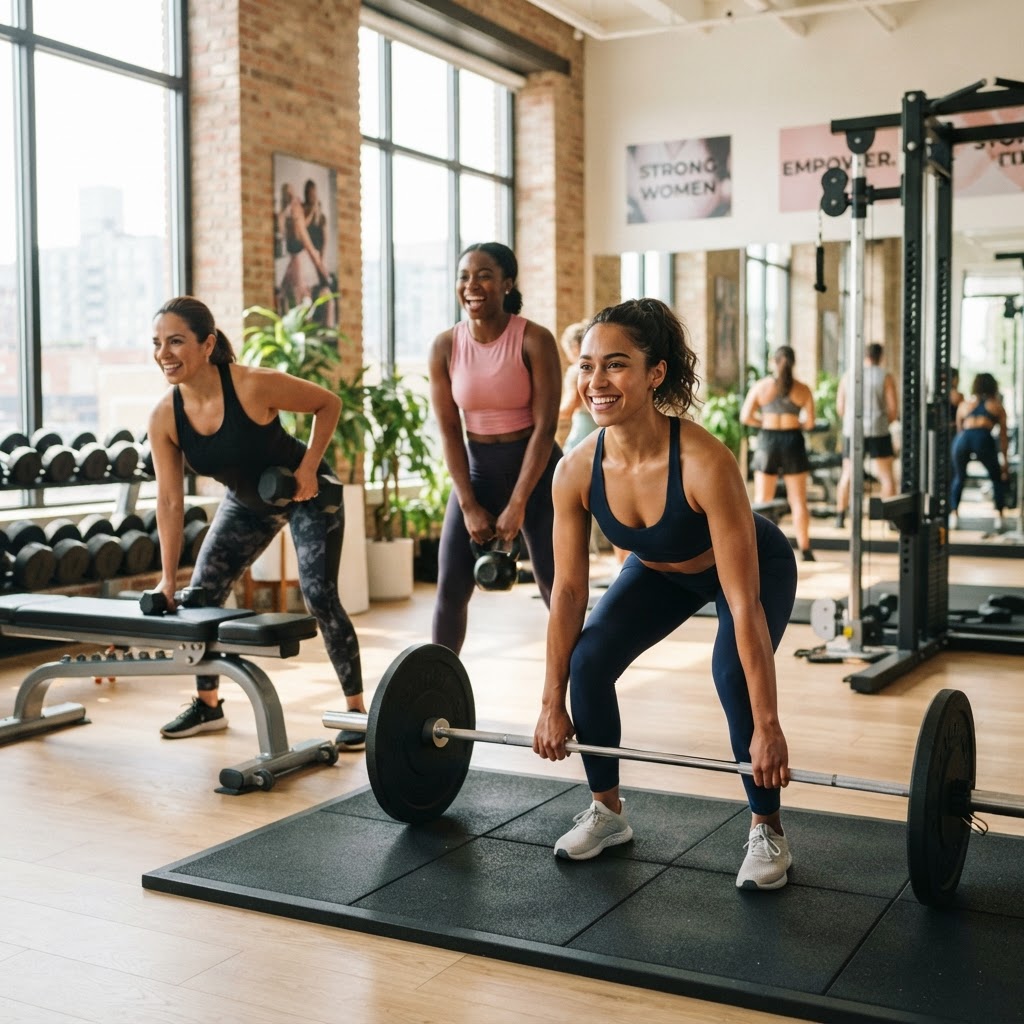
The Hidden Strength of Your Skeleton
When we talk about training at Clarence Park Health Suite, we often focus on how we feel in the mirror or how much weight we can lift. However, for women navigating the hormonal shifts of midlife and beyond, there is a silent, structural priority that deserves our attention: bone mineral density (BMD). As estrogen levels decline, the natural protective effect on our bones begins to wane, increasing the risk of osteopenia and osteoporosis. The good news? Your skeleton is a dynamic, living tissue that responds remarkably well to the right kind of stress.
The Science of Loading
Recent research, including a comprehensive 2025 meta-analysis published in the Journal of Orthopaedic Surgery and Research, has clarified exactly how we can use resistance training to fortify our bones. The data suggests that it is not just about moving; it is about the intensity of that movement.
Studies indicate that high-intensity resistance training—defined as working at 70% or more of your one-repetition maximum (1RM)—has a significant, positive impact on the bone density of the femoral neck and total hip. When you lift a weight that challenges your muscles, you are also sending a mechanical signal to your bones to remodel and strengthen. This is why, in our friendly gym environment, we encourage members to move beyond light, repetitive movements and embrace a more structured, progressive approach to loading.
Actionable Steps for Your Routine
If you are looking to optimize your bone health, consider these evidence-based parameters:
- Prioritize Intensity: Aim for loads that feel challenging. If you are unsure how to gauge 70% of your 1RM, our personal training services can help you establish a baseline so you can train safely and effectively.
- Frequency Matters: The research highlights that training three times per week is often more effective for bone density improvements than lower frequencies. Consistency is the key to long-term structural adaptation.
- Session Duration: Aim for sessions lasting around 40 minutes. This provides enough time to perform compound movements—like squats, presses, and pulls—that place the necessary load on your spine and hips.
- Think Long-Term: Bone remodeling is a slow process. Studies show that interventions lasting 48 weeks or longer yield the most significant results. Think of your gym membership as a long-term investment in your future mobility.
Why Your Approach Matters
At a smaller, friendly gym like ours, you have the advantage of focusing on your own technique without the pressure of a crowded environment. Whether you are just starting your journey or you are a seasoned lifter, the goal remains the same: to provide your body with the stimulus it needs to stay strong.
It is important to remember that you don't need to be an athlete to benefit from this. Whether you are 14 or 74, the principles of progressive overload remain the same. By focusing on compound, weight-bearing movements, you are not just building muscle; you are building a foundation that will support you for decades to come. If you would like a tailored plan to ensure your training is hitting these optimal intensity markers, our personal trainers are here to help you build a routine that is both safe and scientifically sound.