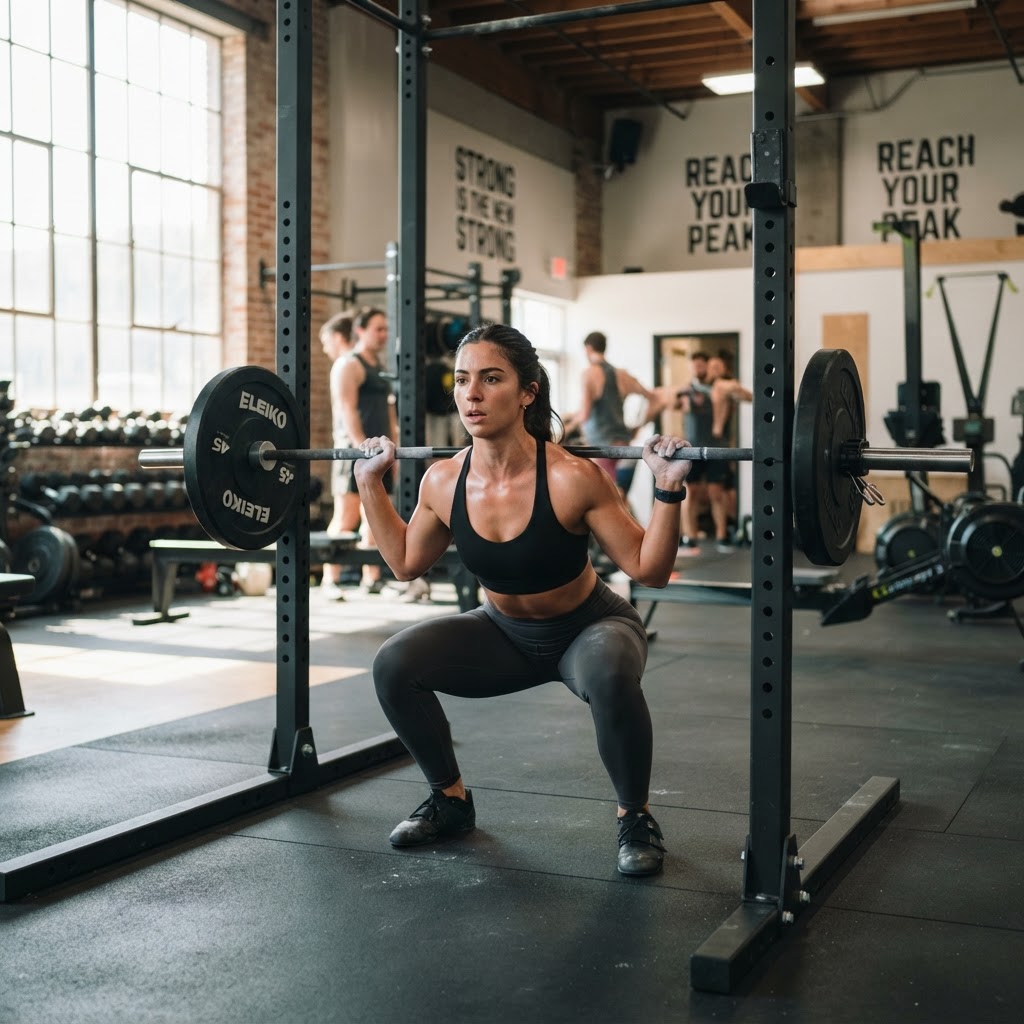
Breaking the Traditional Set Mold
If you have spent any time in our gym here at Clarence Park, you know we value quality over quantity. We often see members pushing through long, grueling sets where the final few repetitions look more like a struggle for survival than a controlled lift. While pushing to fatigue is a staple of muscle building, there is a smarter way to manage your energy: the Cluster Set.
What Are Cluster Sets?
In a traditional set, you perform all your repetitions back-to-back without stopping until you reach your target or failure. A cluster set breaks that single set into smaller 'mini-sets' with very short rest periods—typically 10 to 30 seconds—inserted between them.
For example, instead of doing one set of 12 repetitions on the leg press, you might perform 4 reps, rest for 20 seconds, perform another 4, rest for 20 seconds, and finish with a final 4. You still complete 12 total repetitions, but you have allowed your body a brief window to recover just enough to maintain your movement speed and technique.
Why It Works: The Science of Velocity
A 2026 systematic review and meta-analysis published in Sports Medicine - Open highlighted that cluster sets are highly effective at preserving movement velocity compared to traditional sets [1]. When you perform long, continuous sets, your bar speed naturally drops as fatigue sets in. By using cluster configurations, you keep your 'power' high throughout the entire set, which is particularly beneficial for those looking to improve explosive power or maintain perfect form on heavy compound lifts [1, 4].
Furthermore, research suggests that this method can be a game-changer for efficiency. A study on resistance-trained women found that cluster sets allowed for greater muscular endurance performance while simultaneously reducing the 'fatigue-to-work' ratio [2]. Essentially, you are getting more high-quality work done without feeling as though you have been completely drained by the middle of your workout.
Practical Application for Your Next Session
At Clarence Park Health Suite, we believe in keeping things simple and effective. You don't need complex equipment to try this. Here is how you can integrate it into your next 1-to-1 personal training session or solo workout:
- Choose your exercise: This works best for multi-joint movements like squats, chest presses, or rows.
- Select your load: Use a weight you would normally use for a standard set of 8–12 reps.
- Break it up: Instead of doing all reps at once, aim for 3 mini-sets of 3–4 reps with 20 seconds of rest in between.
- Focus on quality: Because you have that short rest, there is no excuse for sloppy form. Every rep should look as crisp as the first.
Is It Right for You?
While cluster sets are a fantastic tool, they aren't the only way to train. Research indicates that for long-term muscle growth, both traditional sets and cluster sets are effective when total volume is matched [6]. The real benefit of the cluster approach is the ability to maintain high-quality, high-velocity repetitions, which can be a refreshing change of pace if you feel your technique usually breaks down toward the end of a set.
If you are feeling stuck in a plateau or find that your form suffers during your final reps, ask one of our trainers to help you structure a cluster-set protocol during your next visit. It is a small adjustment that can lead to a significant improvement in how you feel and perform in the gym.
Note: As with any advanced training technique, ensure you are comfortable with the movement pattern before adding intensity. If you need guidance on how to implement this safely, our team is always here to help you refine your approach.