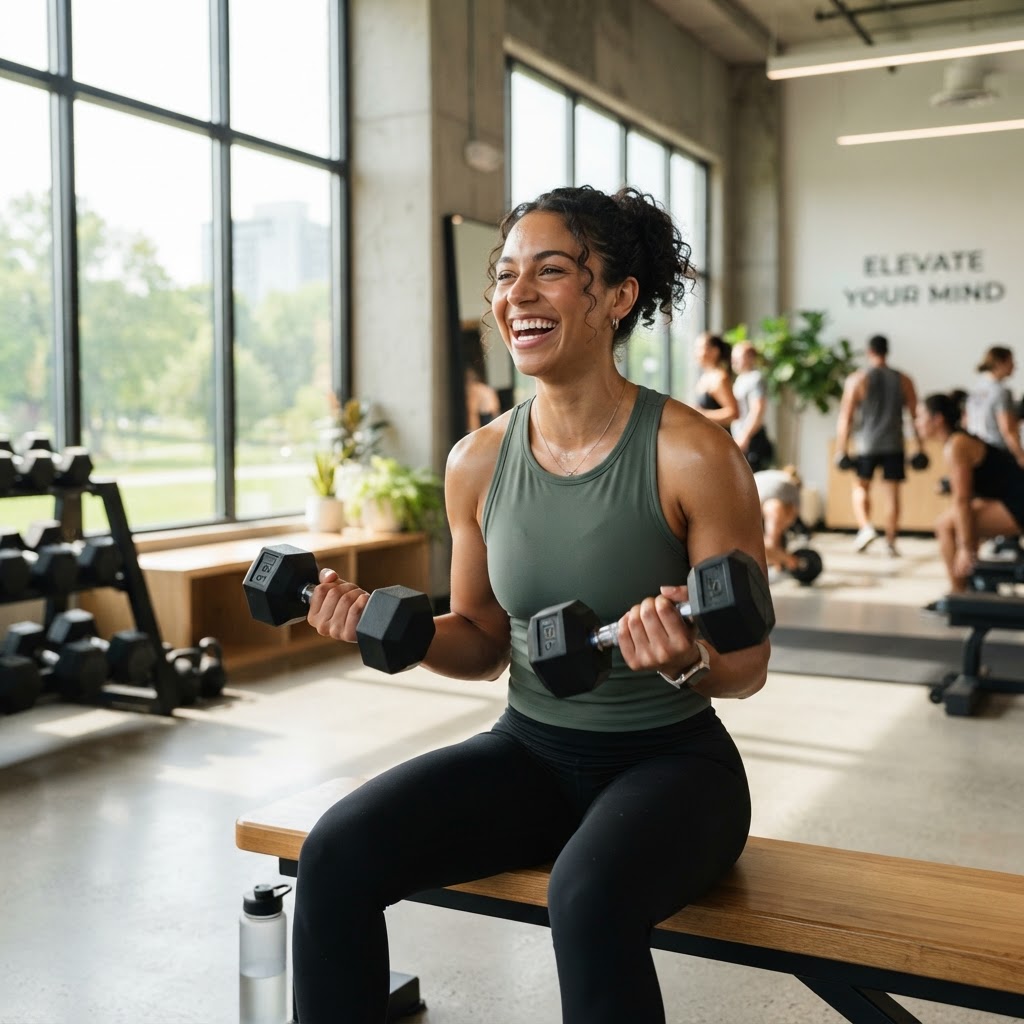
Breaking the Cycle of Repetitive Thought
We often talk about the gym in terms of physical transformation—losing body fat, building muscle, or hitting a new personal best on the squat rack. But at Clarence Park Health Suite, we know that the most significant changes often happen between your ears. If you have ever felt stuck in a loop of repetitive, negative thoughts, you are not alone. Recent research suggests that the secret to breaking this cycle might be found in your training routine.
What is Cognitive Flexibility?
Cognitive flexibility is your brain’s ability to switch between different concepts or adapt your thinking to new, changing situations. It is the mental equivalent of being able to pivot quickly during a game. When this ability is high, you can let go of unproductive thoughts and focus on solutions. When it is low, you may find yourself ruminating on the same stressors, which can contribute to feelings of anxiety and low mood.
Research published in BMC Psychology (2026) highlights that physical activity plays a crucial role in disrupting repetitive negative thinking. By engaging in regular exercise, you are not just training your muscles; you are actively training your brain to be more adaptable [8].
The Science of the Pivot
Why does moving your body change how you think? It comes down to neuroplasticity—the brain's ability to reorganize itself by forming new neural connections. A 2025 study noted that consistent, multicomponent exercise programs significantly improve cognitive flexibility [9].
When you come into the gym for a session, you are challenging your nervous system. Whether you are focusing on your form during a deadlift or managing your breathing during a steady-state cardio session, you are requiring your brain to process information, adjust to physical resistance, and maintain focus. This constant demand for adjustment strengthens the neural pathways associated with executive function, making it easier for you to 'switch gears' when life outside the gym throws you a curveball.
Practical Steps for Your Training
You do not need to be an elite athlete to reap these mental benefits. In fact, the research suggests that consistency is far more important than intensity. Here is how you can use your gym time to sharpen your mental flexibility:
- Prioritize Variety: If you are working with a personal trainer, ask them to introduce new movement patterns or variations to your routine. Learning a new skill or adjusting your grip, stance, or tempo forces your brain to stay engaged and flexible.
- Focus on the 'Mind-Muscle' Connection: Instead of zoning out, pay attention to the tension in your muscles and the rhythm of your breath. This mindfulness during your workout acts as a 'circuit breaker' for repetitive thoughts.
- Consistency Over Intensity: A 2009 study in the Journal of Clinical Psychology in Medical Settings found that even moderate aerobic activity performed 3–4 days a week led to significant improvements in cognitive flexibility [2]. You don't need to train until you collapse; you just need to show up regularly.
Your Personal Training Advantage
At Clarence Park Health Suite, we pride ourselves on being a small, friendly environment where you can focus on your own progress. Whether you are here for individual gym access or working with a personal trainer, remember that every set you complete is a deposit into your mental health account.
By committing to a regular schedule, you are building a stronger, more resilient brain. The next time you feel stuck in a mental rut, remember that the solution might be waiting for you on the gym floor. Come in, move with intention, and give your brain the flexibility it needs to thrive.