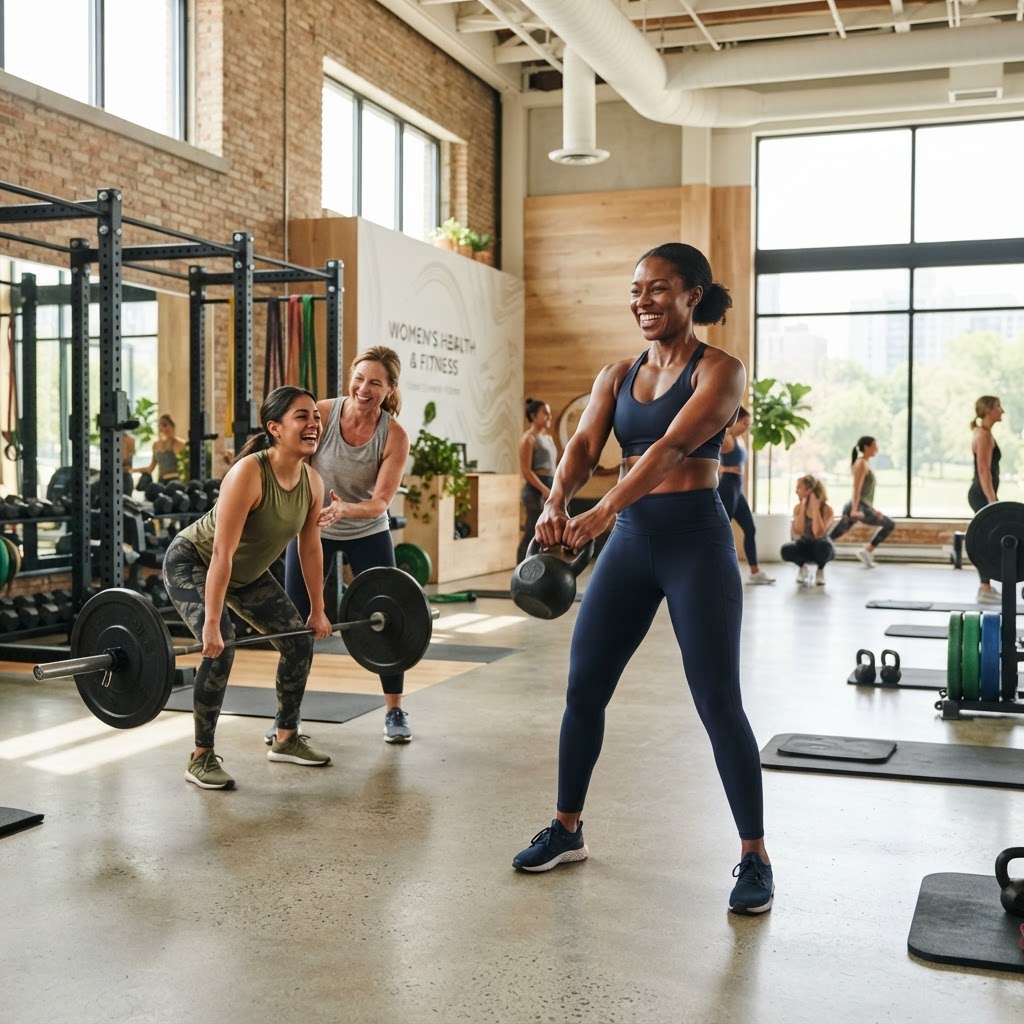
The Fatigue Factor: Why Women Need More Within-Set Effort for Strength Gains
At Clarence Park Health Suite, we often hear the same question from our members: "How close to failure should I be training?" For a long time, fitness advice was largely based on studies conducted on men, often leading to a 'one-size-fits-all' approach. However, recent sports science is highlighting that women’s physiological responses to resistance training can differ, particularly regarding the volume and fatigue required to trigger optimal strength adaptations.
The Science of Within-Set Fatigue
A fascinating study published in August 2025 in Biology of Sport (Rodiles-Guerrero et al., 2025) investigated how different 'velocity loss' thresholds affect strength and muscle growth in resistance-trained women. Velocity loss is a technical way of measuring how much your movement speed slows down as you get tired during a set.
The researchers found that while performing just one repetition per set was enough to see some improvement, it was insufficient to maximize strength gains. Crucially, the study suggested that women might require higher levels of within-set fatigue—meaning they need to push closer to the point where they can no longer complete a repetition with good form—to achieve the best results. This supports earlier findings suggesting that women may benefit from higher training volumes and more fatigue-inducing sets compared to their male counterparts to reach their full potential.
What This Means for Your Gym Sessions
If you are currently training at our gym, this research offers a practical takeaway: don't be afraid to challenge yourself by staying in the set a little longer. If you are stopping your sets while you still feel like you could easily perform five or more additional repetitions, you might be leaving progress on the table.
Here is how you can apply this to your individual gym access or 1-to-1 personal training sessions:
- Monitor Your Effort: During your next session, pay attention to your movement speed. If you are moving the weight at the same speed on your last rep as you were on your first, you likely have plenty of 'reps in reserve.'
- Gradual Progression: You don't need to go to absolute failure on every single set, which can be taxing on your recovery. Instead, aim to finish your sets feeling like you could only perform one or two more repetitions with perfect form.
- Focus on Quality: While we want to increase fatigue, form is paramount. If your technique breaks down, the stimulus shifts away from the target muscle. Use your 1-to-1 personal training sessions to learn how to identify that 'sweet spot' where you are working hard enough to stimulate growth without compromising your safety.
Why Your Individual Approach Matters
At a small, friendly gym like ours, we understand that every woman’s body responds differently. Whether you are looking to lose body fat, build lean muscle, or simply feel stronger in your daily life, the key is consistency combined with the right intensity.
Research consistently shows that resistance training is one of the most effective tools for improving metabolic health, bone density, and body composition in women of all ages. By understanding that your body may thrive on a slightly higher threshold of effort, you can refine your training to be more efficient.
If you are unsure how to adjust your current routine, our personal trainers are here to help you calibrate your intensity. We can help you track your progress and ensure that your training volume is perfectly matched to your goals, ensuring you get the most out of every visit to the gym.