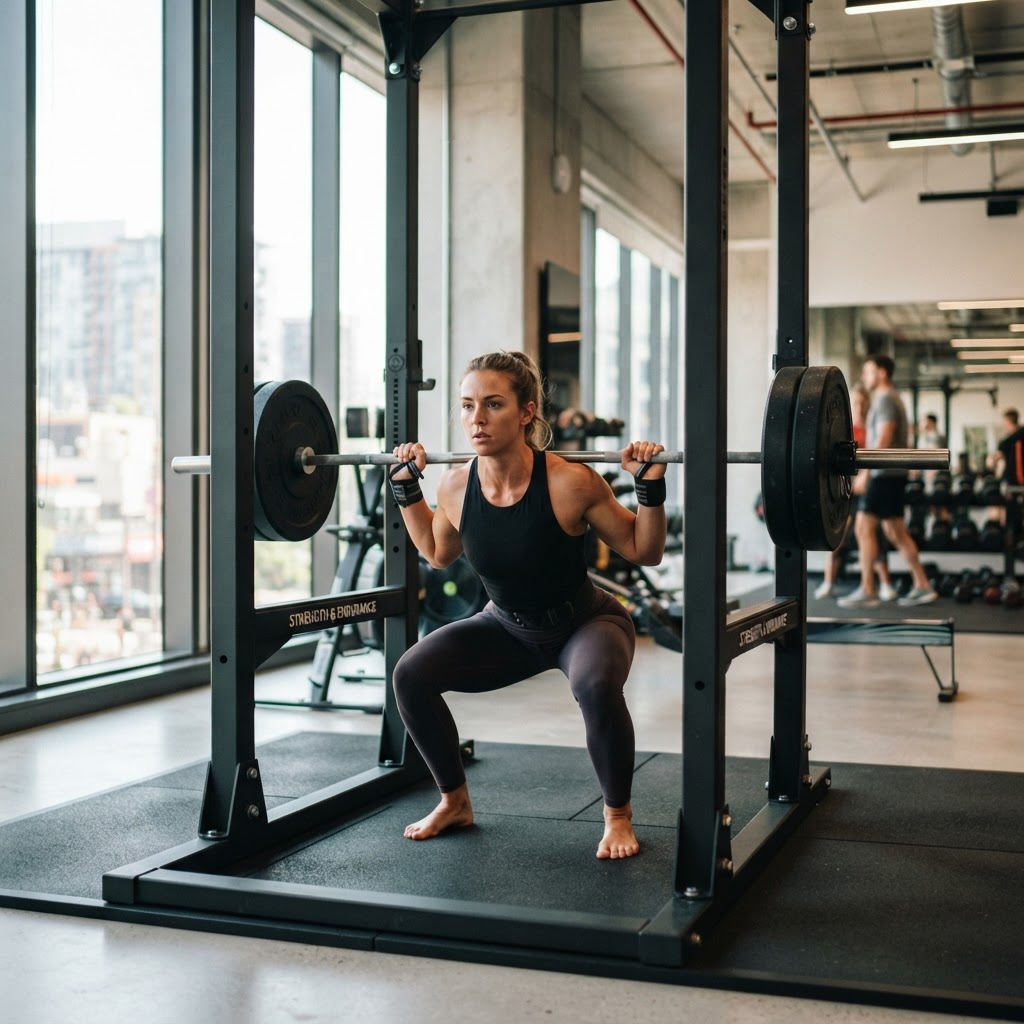
The Power of the Pause
In the friendly, focused environment of our Malvern gym, we often see members rushing through their sets, eager to get the work done. While consistency is key, the way you perform each repetition can be the difference between hitting a plateau and seeing consistent progress. If you are looking to get more out of your time on the gym floor, it is time to talk about the isometric hold.
What is an Isometric Hold?
An isometric hold involves pausing at a specific point in a movement where the muscle is under the highest amount of tension. Unlike a standard repetition where you move continuously, a hold forces your muscle fibers to maintain force production without changing length. Research into muscle hypertrophy and strength adaptations suggests that this added time under tension at specific joint angles can be a game-changer for your training.
Why It Works
Recent studies into muscle length and tension have highlighted that training at specific ranges can significantly influence how your muscles adapt. While we know that training at longer muscle lengths is highly effective for growth, adding an isometric pause at the point of peak tension—often the most challenging part of the lift—increases the metabolic demand on the muscle.
By pausing for 1–2 seconds at the point of maximum contraction or maximum stretch, you eliminate the use of momentum. This forces your nervous system to recruit more motor units to maintain the position, leading to greater mechanical tension. This is a simple, effective technique that you can apply to almost any movement, whether you are using our free weights or our selectorized machines.
How to Apply It Today
You do not need to change your entire routine to see the benefits. Here is how to integrate this into your next session:
- Pick one movement: Start with a foundational exercise, such as a chest press or a seated row.
- The Pause Point: Identify the point of peak tension. For a chest press, this is just before the bar touches your chest (the deep stretch position). For a row, it is the moment your elbows are pulled back and your shoulder blades are squeezed together.
- Hold for 1-2 seconds: Do not overcomplicate it. A brief, controlled pause is all you need to remove momentum and force your muscles to work harder.
- Maintain Control: Ensure your form remains perfect during the hold. If you find yourself shaking uncontrollably or losing your posture, reduce the weight slightly.
A Note on Training Smart
At Clarence Park Health Suite, we believe that training should be sustainable and effective. Adding isometric holds is a fantastic way to increase the intensity of your workout without needing to spend extra hours in the gym. It turns a standard set into a high-quality, focused effort.
If you are unsure about which exercises would benefit most from this technique, or if you want to ensure your form is spot-on, our 1-to-1 personal training services are designed to help you refine these details. Whether you are a beginner or a seasoned lifter, mastering the 'pause' can help you break through plateaus and build a more resilient, capable body.
Remember, it is not just about the weight on the bar; it is about how you control that weight. Slow down, hold the tension, and feel the difference in your next session.