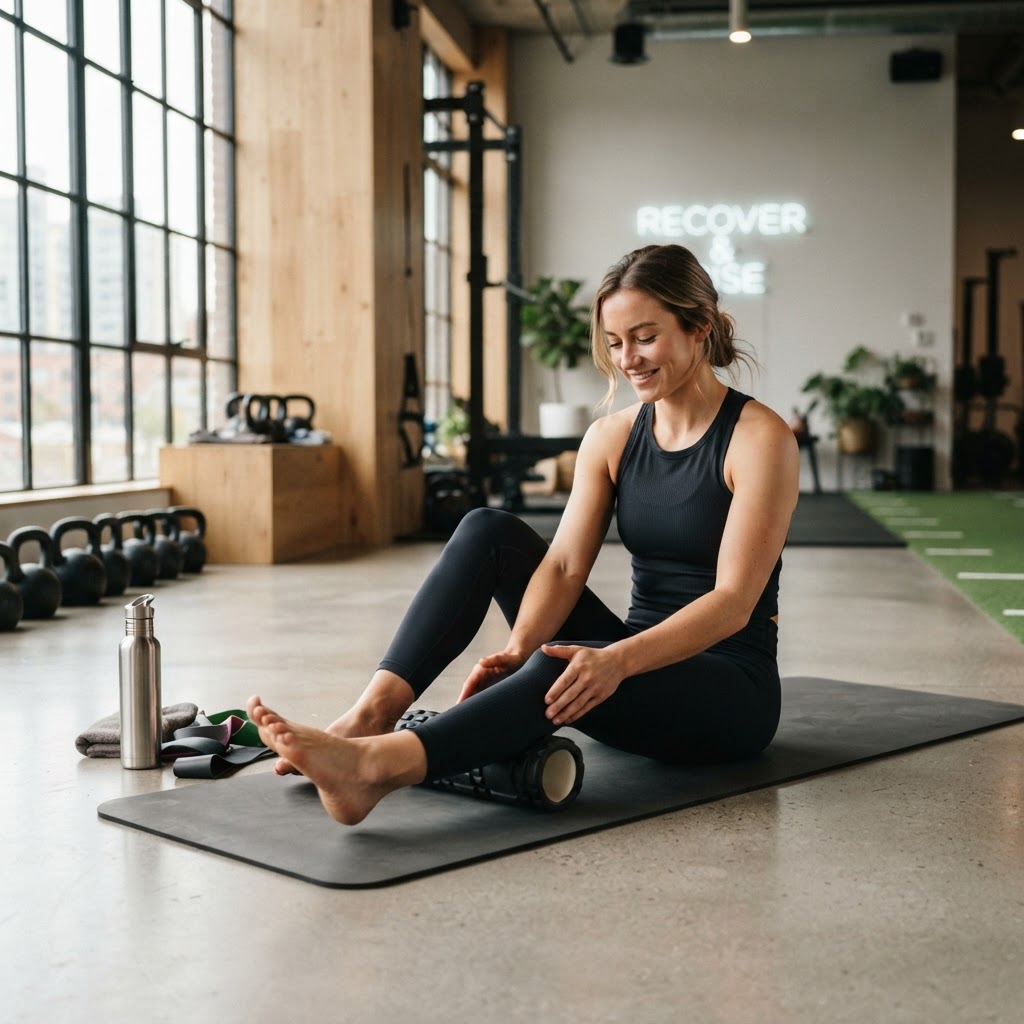
The Science of Clearing the Burn
We have all been there: you finish a challenging session at the gym, and your muscles feel heavy, tight, and perhaps a little shaky. While many gym-goers immediately reach for a foam roller or head straight to the car, recent research suggests that your immediate post-workout choices can significantly influence how quickly your body resets. A key player in this process is lactate—a byproduct of intense exercise that often gets a bad reputation, but is actually a valuable energy source if managed correctly.
Recent studies, including a 2024 investigation published in Scientific Reports, have highlighted that the mechanical pressure and movement involved in active recovery techniques can lead to more efficient lactate clearance compared to simply sitting still. When you move, you encourage blood and lymph flow, which helps your body process metabolic byproducts more effectively than passive rest alone.
Why 'Active' Beats 'Passive'
It is easy to assume that the best way to recover is to do absolutely nothing. However, the evidence suggests that 'active recovery'—defined as low-intensity movement—can be a powerful tool for the everyday gym-goer. Whether you are here at Clarence Park Health Suite to build muscle or improve your general fitness, incorporating a few minutes of light movement immediately after your main sets can make a tangible difference in how you feel the next day.
According to a 2026 systematic review in the journal Healthcare, active recovery is particularly favorable for short-term performance restoration. While passive rest is fine, it doesn't provide the same 'flushing' effect that gentle, rhythmic movement does. Think of it as helping your body's internal plumbing system work a little faster.
Practical Steps for Your Next Session
You don't need to be an elite athlete to benefit from these findings. Here is how you can apply this to your routine at our gym:
- The 5-Minute Cool-Down: Instead of stopping your workout abruptly, spend the final 5 minutes of your session performing very light, rhythmic movement. This could be a slow walk on the treadmill, gentle cycling at a low resistance, or light bodyweight movements.
- In-Between Set Movement: If you are performing high-intensity intervals or heavy lifting, keep moving during your rest periods. A slow, steady walk around the gym floor is often better than sitting on a bench for the entire duration of your rest.
- Listen to Your Body: The goal of active recovery is not to add more 'work' to your workout. It should feel comfortable and easy. If you find yourself breathing heavily, you are going too hard. The intensity should be low enough that you could easily hold a conversation.
A Balanced Approach
While movement is a fantastic tool, it is important to remember that recovery is a multi-faceted process. As noted in recent research, the most effective recovery strategy is a combination of consistent sleep (aiming for 7–9 hours), proper protein intake (20–40g post-workout), and a well-structured training plan that allows for adequate rest days.
At Clarence Park Health Suite, we believe that recovery shouldn't be complicated. You don't need expensive gadgets or complex protocols to see results. By simply prioritizing a few minutes of light movement after your training, you are giving your body the best possible environment to repair, adapt, and come back stronger for your next session. If you are ever unsure about how to structure your cool-down or want to refine your training plan, our personal trainers are always on hand to help you tailor these strategies to your specific goals.