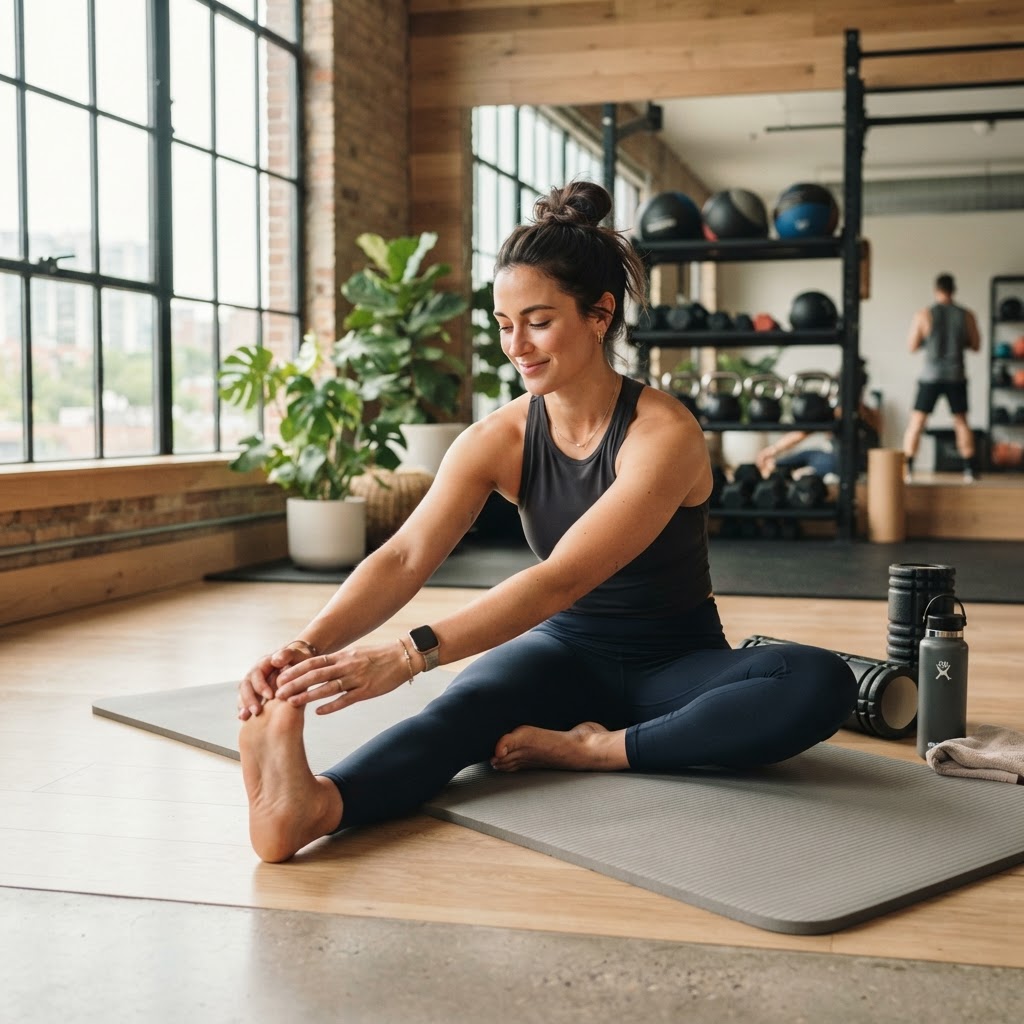
The Hidden Recovery Tool
At Clarence Park Health Suite, we often talk about the importance of your post-workout nutrition or your sleep quality. But there is one recovery tool you have with you at all times, requires no equipment, and is backed by compelling new research: your nose.
When you finish a challenging set of squats or a tough stint on the treadmill, the natural instinct is to gasp for air through your mouth. While this feels like the quickest way to catch your breath, recent studies suggest that shifting to nasal breathing as soon as your heart rate begins to settle is a superior strategy for recovery.
The Science of the Shift
Recovery is essentially a race to switch your body from a 'fight or flight' state (sympathetic nervous system) to a 'rest and digest' state (parasympathetic nervous system). Research published in Clinical Physiology and Functional Imaging highlights that physical recovery is mediated by the reactivation of this parasympathetic nervous system [7].
So, how does breathing through your nose help?
Recent data indicates that nasal breathing is associated with lower diastolic blood pressure and a higher contribution to heart rate variability (HRV) compared to oral breathing [2]. By breathing through your nose, you are sending a biological signal to your brain that the 'threat' of the exercise stress is over, allowing your heart rate to return to baseline more efficiently [3, 8].
Why Mouth Breathing Stalls Your Downshift
When you breathe through your mouth, you often take shallow, rapid breaths. This can keep your body in a state of high arousal. Furthermore, research has shown that nasal breathing helps warm and humidify the air you inhale, which is far less taxing on your respiratory system than the rapid, dry air intake associated with heavy mouth breathing [9].
By choosing to breathe through your nose during your rest intervals—or even during the final, lower-intensity minutes of your workout—you are essentially 'hacking' your autonomic nervous system to prioritize repair over performance [2, 4].
Practical Steps for Your Next Session
You don't need to be a breathing expert to use this at our gym. Here is how to integrate this into your routine:
- The 'Nasal-Only' Cool Down: Once you finish your final set, spend the first 3–5 minutes of your cool-down exclusively breathing through your nose. If you find it difficult, slow your pace down until you can maintain a steady nasal rhythm.
- The Rest Interval Reset: During your rest periods between sets, consciously close your mouth. Focus on slow, controlled nasal inhalations and exhalations. This helps lower your perceived exertion (RPE) before you tackle your next set [2].
- Don't Force It: If you are mid-set and pushing for a personal best, your body needs oxygen quickly, and mouth breathing is perfectly fine. The goal is to use nasal breathing as a recovery tool, not a performance limiter.
A Friendly Reminder
At Clarence Park Health Suite, we pride ourselves on providing a space where you can focus on your individual progress. Whether you are working through a personal training session or enjoying some quiet time on the gym floor, remember that your recovery starts the moment you finish your last rep.
Next time you feel that post-workout 'gasp,' try closing your mouth, taking a deep breath through your nose, and feeling your heart rate settle just a little bit faster. It is a small, simple change that can make a big difference in how you feel for the rest of your day.