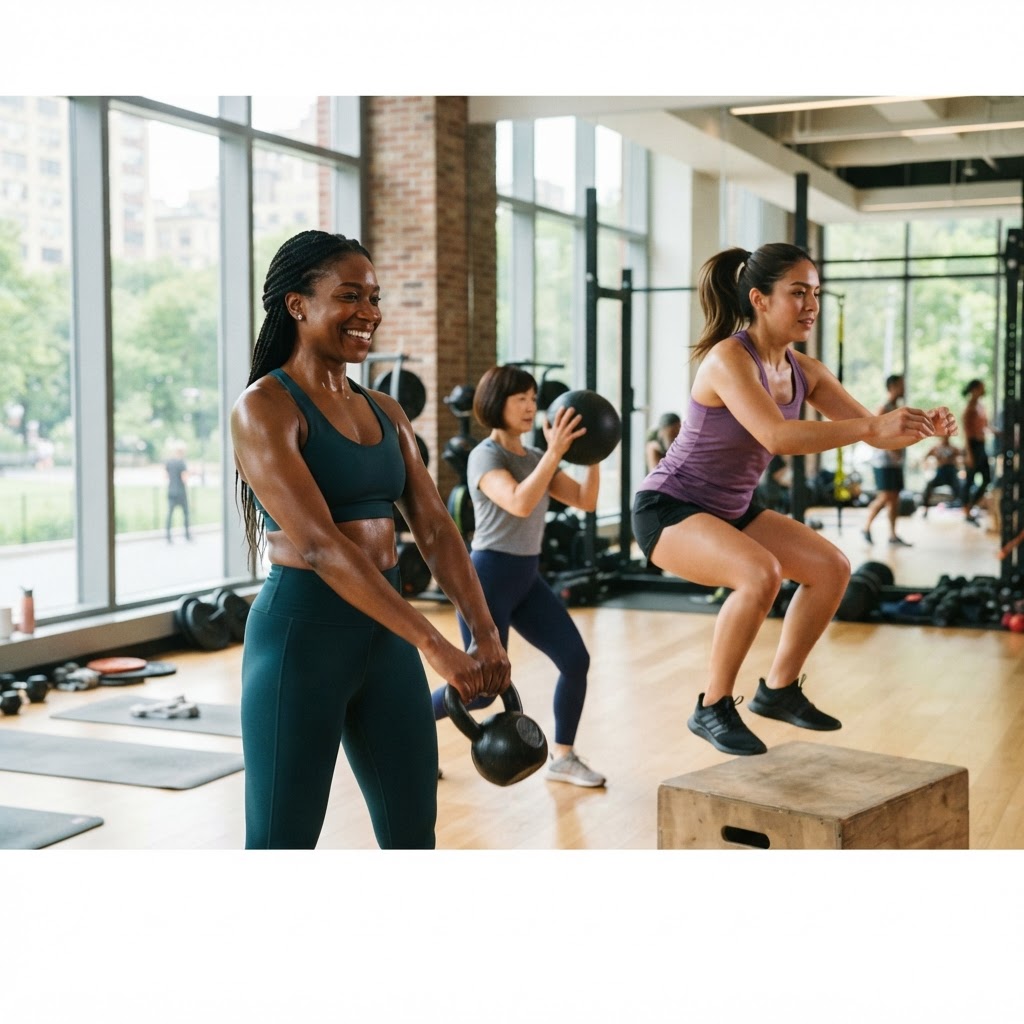
The Hidden Strength of Your Skeleton
When we talk about training at Clarence Park Health Suite, the conversation often drifts toward muscle tone or body composition. However, there is a silent, structural transformation happening beneath the surface every time you pick up a weight: your bone density. For women, particularly as we navigate different life stages from adolescence through to post-menopause, the skeleton is not a static frame—it is a living, adaptive tissue that responds directly to the mechanical stress we place upon it.
The Science of Osteogenic Loading
Research has long established that resistance training is one of the most effective ways to maintain musculoskeletal health. A landmark study known as the LIFTMOR trial (Lifting Intervention for Training Muscle and Osteoporosis Rehabilitation) challenged the traditional, cautious approach to bone health. Researchers like S.L. Watson demonstrated that high-intensity resistance and impact training (HiRIT) is not only safe for women with low bone mass but is significantly more effective at improving bone mineral density (BMD) in the lumbar spine and femoral neck than low-intensity alternatives.
Why does this happen? Bones follow a principle known as Wolff’s Law, which states that bone in a healthy person or animal will adapt to the loads under which it is placed. When you perform compound movements—like a controlled squat or a deadlift—you apply a mechanical load that signals your body to increase bone mineral content. This process, often called osteogenic loading, essentially 'reminds' your bones to stay strong and dense.
Why 'Heavy' is Relative
At our gym, we often hear members express concern about lifting 'too heavy.' It is important to clarify that 'high-intensity' in a research context doesn't mean you need to walk in and attempt a world-record lift on day one. It means training at a percentage of your capacity that provides a sufficient stimulus to trigger adaptation.
For a teenager, this might mean building a foundation of proper form to support peak bone mass acquisition. For a woman in her 40s or 50s, it means using progressive resistance to buffer against the natural decline in bone density that occurs during hormonal shifts. The goal is to move from 'maintenance' to 'stimulation.'
Practical Steps for Your Training
If you are looking to prioritize your bone health, here is how you can apply these findings to your sessions at the gym:
- Focus on Compound Movements: Prioritize exercises that involve multiple joints, such as squats, presses, and pulls. These movements naturally distribute load across the skeleton, providing the most effective stimulus for bone density.
- Prioritize Progressive Overload: Your bones need a reason to adapt. If you lift the same weight for months, your skeleton will eventually stop receiving the signal to strengthen. Work with a personal trainer to ensure you are safely and consistently increasing the intensity of your lifts over time.
- Consistency Over Intensity: While high-intensity is the goal, it must be sustainable. Regular, focused sessions are far more effective than sporadic, overly ambitious workouts.
A Personal Approach to Longevity
At Clarence Park Health Suite, we believe that the best gym environment is one where you feel supported in your individual journey. Whether you are just starting out or have been training for years, our gym membership provides you with the space and equipment to perform these essential, bone-strengthening movements. If you are unsure how to safely incorporate higher-intensity loading into your routine, our 1-to-1 personal training services are designed to help you build a program that is tailored to your specific bone health needs and physical capabilities.
Your skeleton is the foundation of your independence. By choosing to challenge your muscles and bones today, you are investing in a stronger, more resilient future.