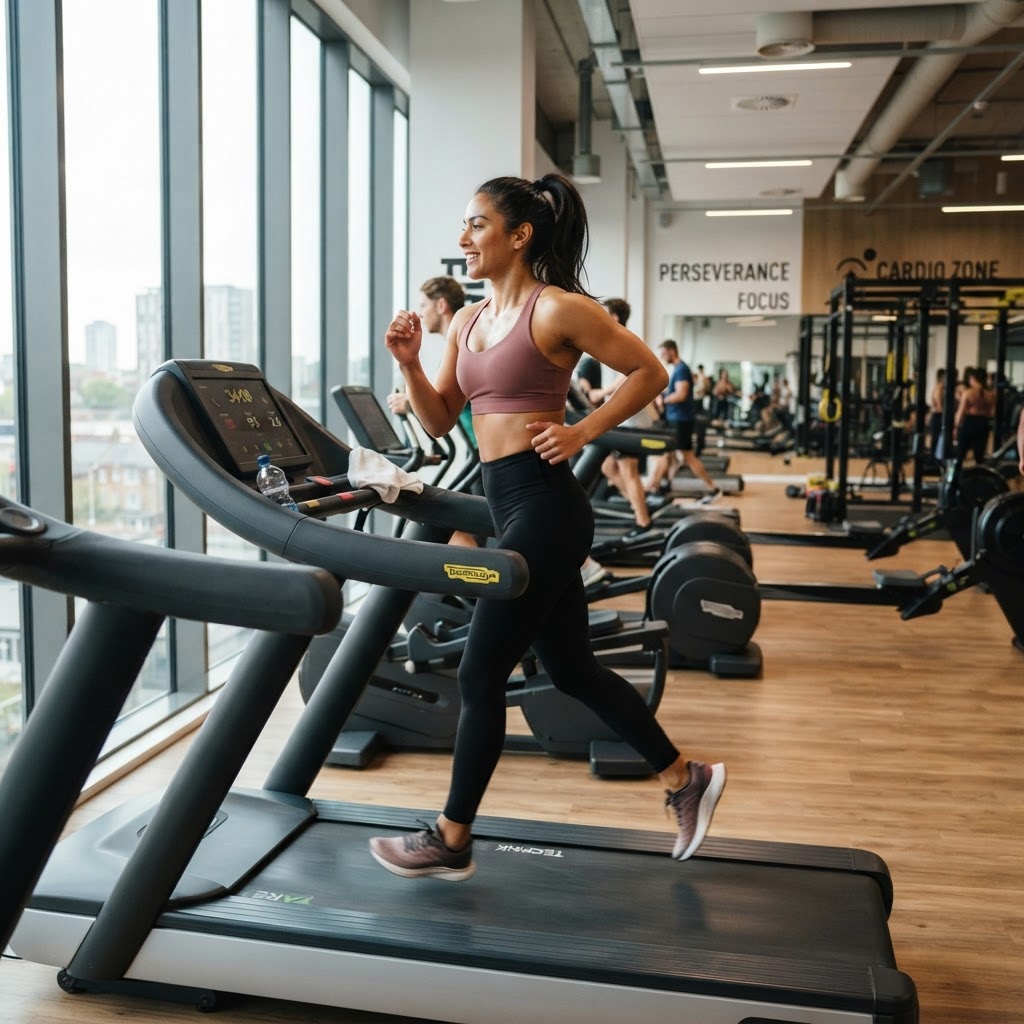
Beyond the Heart: Training for Your Skeleton
When we talk about cardio at Clarence Park Health Suite, the conversation usually revolves around heart health, fat loss, or endurance. However, there is a hidden benefit to your movement that often goes overlooked: the structural integrity of your skeleton. While steady-state cardio is excellent for your cardiovascular system, recent research suggests that if you want to protect your bone mineral density (BMD), you need to change how you approach your cardio sessions.
The Problem with 'Continuous' Loading
Research into bone physiology has revealed a fascinating quirk: bone cells, known as osteocytes, are surprisingly quick to adapt to repetitive stress. A study published in the Journal of Cachexia, Sarcopenia and Muscle (Goldenshluger et al., 2026) highlights that while aerobic exercise is vital for bone health—particularly by attenuating bone loss—the way we apply that load matters.
In animal models and human trials, it has been observed that bone tissue can become 'desensitized' to continuous, repetitive loading. If you go for a long, steady run, your bones receive a consistent signal. Over time, the osteogenic (bone-building) response to that specific stimulus diminishes. To keep your bones adapting and growing stronger, they need variety and, crucially, rest periods between high-impact bouts.
The Power of Intermittent Impact
To maximize the bone-building potential of your cardio, consider incorporating 'intermittent impact' into your gym routine. Instead of one long, continuous session, break your high-impact work into short, intense bursts.
According to research on mechanical loading, activities that reach high multiples of body weight—such as jumping or plyometric movements—are the most effective at stimulating bone growth (Physiopedia, 2024). By performing these movements in short, defined bouts rather than one continuous block, you prevent the desensitization effect. This is why we often encourage members to integrate short, controlled jumping or skipping intervals into their individual gym sessions.
Practical Steps for Your Next Session
You don't need to be an elite athlete to benefit from this. Whether you are looking to improve your fitness or maintain bone density as you age, you can apply these principles in our gym:
- Incorporate 'Impact' Intervals: If you are using the treadmill or floor space, add 30-second bursts of high-impact movement (like skipping or controlled box jumps) followed by 90 seconds of recovery. This 'rest' period is essential for the bone cells to reset their sensitivity to the load.
- Combine with Resistance: The American Heart Association (2024) notes that resistance training, when combined with weight-bearing, high-impact activities, is the gold standard for bone health. Use your gym membership to alternate between strength-focused sets and these short, high-impact cardio bursts.
- Listen to Your Body: High-impact loading is powerful, but it requires proper form. If you are new to these movements, consider booking a 1-to-1 personal training session. A trainer can help you master the landing mechanics to ensure you are getting the bone-building benefits without unnecessary strain on your joints.
Why It Matters
Building bone density is a long-term investment. By shifting your perspective on cardio from 'just burning calories' to 'structurally reinforcing your frame,' you are setting yourself up for better physical function for years to come. At Clarence Park, we believe in training for the long haul—and that starts with a skeleton that is as strong as your heart.
Next time you step onto the gym floor, remember: your bones are listening to the impact. Give them a reason to grow stronger.