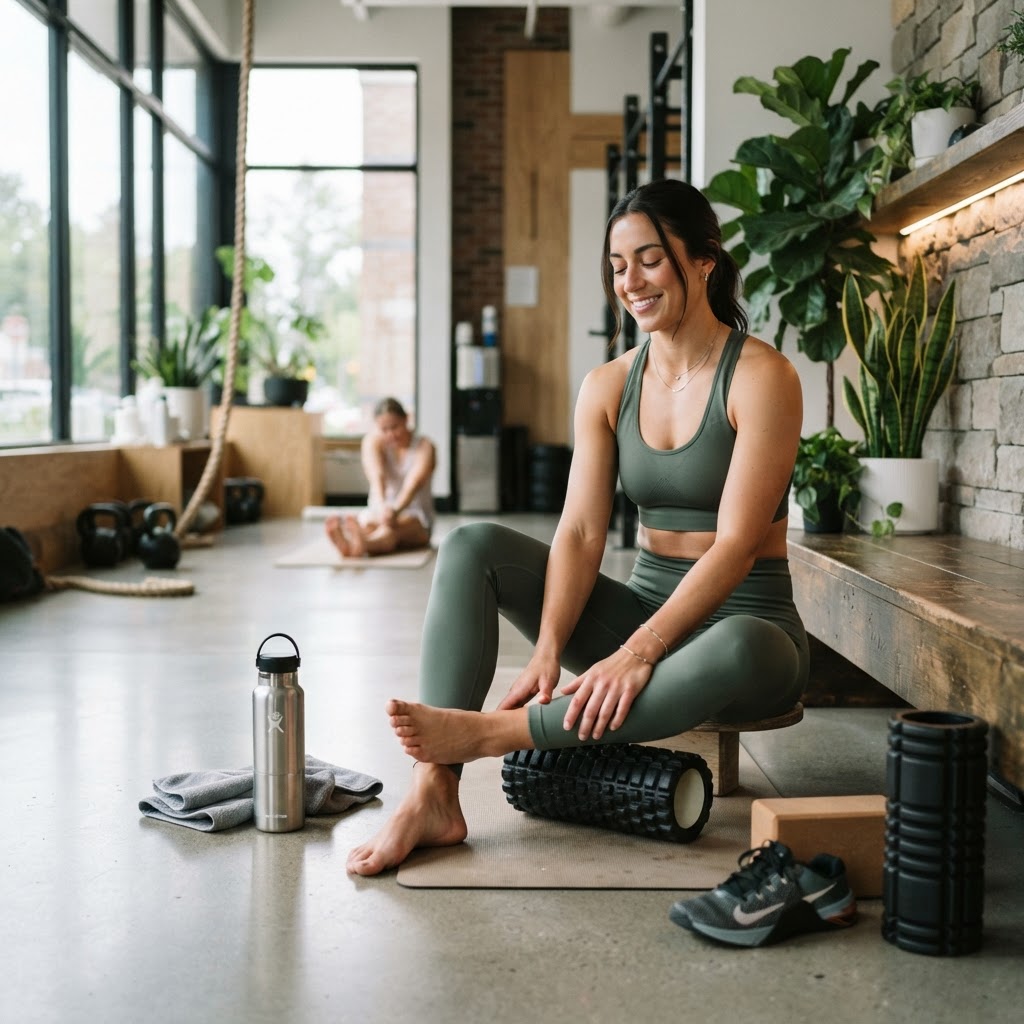
The Hidden Engine of Your Progress
At Clarence Park Health Suite, we often see members focused entirely on the hour they spend in the gym. Whether you are here for 1-to-1 personal training or individual gym access, the effort you put into your sets is only half the equation. The real transformation happens when you leave our doors. While many look for the latest recovery gadgets or supplements, the most potent recovery tool you possess is entirely free: your sleep.
Sleep as an Active Recovery Process
Recent research has shifted the perspective on sleep from a passive state of rest to an active, critical component of physiological repair. According to a 2026 review published in Quality in Sport, sleep deprivation can disrupt the GH/IGF-1 axis—the hormonal pathway responsible for growth and repair—while simultaneously increasing cortisol, the body’s primary stress hormone [1].
When you are sleep-deprived, your body struggles to synthesize muscle protein effectively. Studies have shown that even a single night of significant sleep loss can reduce muscle protein synthesis rates by as much as 18% [7]. If you are training to build muscle or lose body fat, cutting your sleep short is essentially hitting the 'pause' button on your results.
The Hormonal Impact
Why does this happen? During deep sleep, your body works to repair the micro-tears created during your resistance training. Research indicates that sleep restriction promotes a catabolic (muscle-breaking) state by elevating cortisol and suppressing testosterone and growth hormone [7].
Think of your gym sessions as the stimulus and your sleep as the construction crew. If you provide the stimulus but send the construction crew home early, the building never gets finished. This is why we encourage our members to view their nightly rest with the same discipline they apply to their training sessions.
Actionable Steps for Better Recovery
If you want to maximize your time at the gym, consider these science-backed strategies to improve your sleep quality:
- Prioritize Consistency: Aim for 7–9 hours of sleep per night. Research consistently shows that increasing sleep duration can improve reaction time, aerobic capacity, and body composition [4].
- Strategic Nutrition: A 2023 study found that ingesting 45g of protein (either whey or casein) shortly before sleep significantly increases both mitochondrial and myofibrillar protein synthesis rates during the night [9]. This provides your body with the amino acids it needs to repair tissue while you rest.
- Manage Your Training Timing: While there is no single 'perfect' time to exercise, ensure your training schedule aligns with your circadian rhythm. If you find that late-night high-intensity sessions leave you feeling wired, try shifting your workouts to earlier in the day to see if your sleep quality improves [8].
- Avoid the 'Recovery Trap': A 2026 meta-analysis suggests that many popular recovery modalities (like ice baths or compression gear) have only modest, inconsistent effects compared to the fundamental basics [10]. Don't let the hype of expensive gadgets distract you from the foundational need for adequate sleep and proper nutrition [2].
The Bottom Line
At our gym, we believe in keeping things simple and effective. You don't need to spend hours on fancy recovery protocols to see progress. By focusing on the basics—consistent training, adequate protein intake, and prioritizing 7–9 hours of quality sleep—you provide your body with the environment it needs to adapt, grow, and recover.
If you are struggling to balance your training load with your recovery needs, our personal trainers are here to help you structure a plan that works for your lifestyle. Remember, the work you do in the gym is only as effective as the recovery you achieve at home.