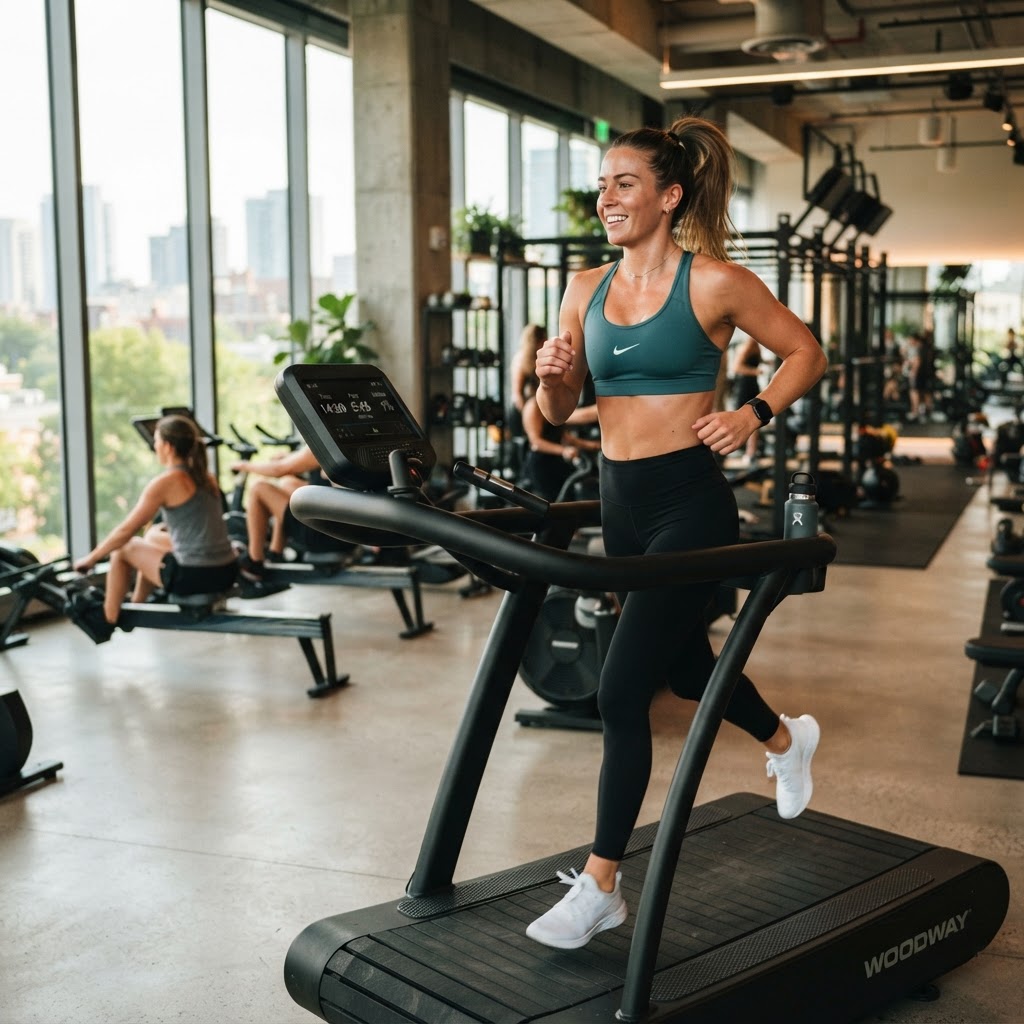
Rethinking Your Cardio Approach
When we think of cardio, most of us immediately picture long, steady-state sessions on a treadmill or a bike. While these are excellent for general health, they often come with a significant "cost" in terms of systemic fatigue, which can leave you feeling drained for your strength training sessions. At Clarence Park Health Suite, we often talk to members who want to improve their heart health but are worried about "overdoing it" and compromising their muscle-building goals.
Recent research suggests there is a smarter way to approach your cardiovascular training: Small Muscle Mass Exercise.
The Science of the Periphery
Traditionally, we are told that to improve our VO2max, we must engage large muscle groups—like the legs—to force the heart to pump massive amounts of blood. However, a 2026 review published in the journal PMC highlights a fascinating concept: the "centrality of the periphery."
Researchers found that for many individuals, the limiting factor in fitness isn't just the heart's ability to pump blood, but the muscle's ability to utilize that oxygen. By focusing on smaller muscle groups (such as the quadriceps in isolation or even arm-based movements), you can bypass the cardiovascular strain that often limits how hard you can push during a full-body workout. This allows the specific muscle group to reach higher metabolic rates and triggers significant peripheral adaptations, such as increased capillarization—the growth of tiny blood vessels that deliver oxygen directly to your muscle fibers.
Why This Matters for You
If you are a regular at our gym, you know that we prioritize a balanced approach. Whether you are here to lose body fat or build lean muscle, the "Peripheral Advantage" offers three distinct benefits:
- Reduced Systemic Fatigue: Because you are using less total muscle mass, you don't tax your central nervous system as heavily as a 45-minute run. This means you can still hit your personal training session with intensity later in the week.
- Targeted Vascular Growth: By pushing a smaller muscle group to its limit, you create a localized environment of high metabolic demand. This encourages the body to build a denser network of capillaries, making your muscles more efficient at burning fat and clearing metabolic waste.
- Time Efficiency: You can achieve a high-intensity stimulus in a shorter window, which is perfect for those days when you only have 20 minutes to spare before heading back to work or home.
Practical Application at the Gym
You don't need fancy equipment to implement this. Here is how you can integrate this into your routine at Clarence Park:
- The Isolation Burn: Instead of a standard 30-minute cycle, try a high-intensity interval approach using a single-leg press or a seated leg extension at a moderate weight. Focus on keeping the movement continuous for 60-second bursts, followed by 30 seconds of rest.
- Prioritize Strength First: As noted in recent umbrella reviews on concurrent training, performing your resistance training before your cardio session is generally the best way to ensure you don't compromise your strength gains. Use these small-muscle cardio bursts as a "finisher" at the end of your workout.
- Listen to Your Body: Because this method allows you to push muscles to a high degree of metabolic fluctuation, you will feel the "burn" quickly. This is a sign that your muscles are working hard to adapt.
A Friendly Reminder
At our gym, we believe that fitness should be sustainable. Whether you are just starting your journey or you are a seasoned athlete, the goal is to find a rhythm that works for your lifestyle. If you are unsure how to incorporate these targeted cardio techniques into your current routine, our personal trainers are always on hand to help you design a program that balances your strength goals with your cardiovascular health.
Remember, you don't always have to go "big" to get better. Sometimes, the most effective path to a stronger heart and more efficient muscles is to focus on the small details.