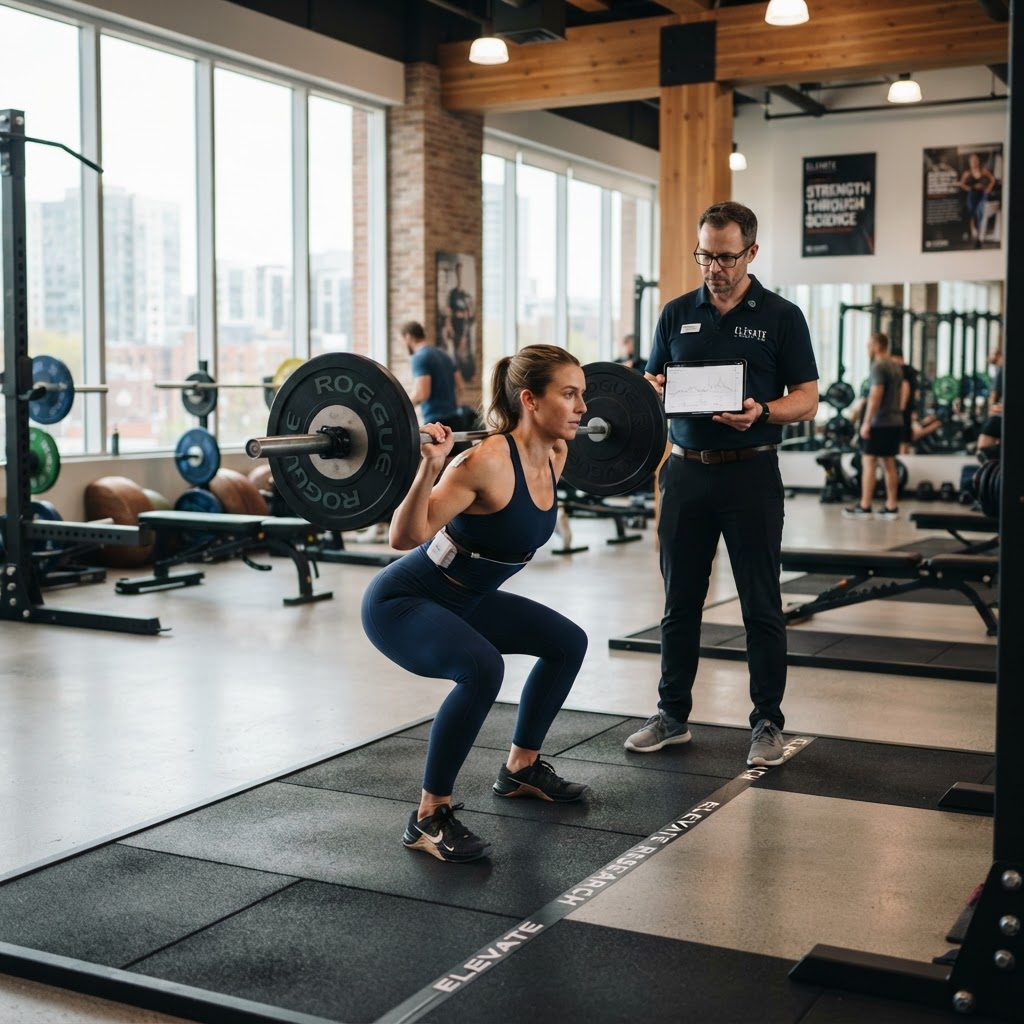
The Hidden Archive in Your Muscles
If you have ever taken a break from the gym—whether due to a busy work schedule, a holiday, or a minor injury—you might have worried that your hard-earned progress was vanishing. At Clarence Park Health Suite, we often hear members express frustration when they feel they are 'starting from scratch' after a few weeks away. However, recent scientific research suggests that your body is far more resilient than you might think. Your muscles possess a sophisticated 'proteomic memory' that keeps your previous efforts alive, even when you aren't actively training.
What is Proteomic Memory?
A fascinating study published in The Journal of Physiology (Hulmi et al., 2025) explored how skeletal muscle adapts to resistance training, detraining, and subsequent retraining. Researchers found that after a 10-week training block, specific proteins involved in muscle contraction, energy metabolism, and structural integrity remained elevated even after 2.5 months of complete inactivity [4, 8].
Think of your muscles not just as tissue, but as a biological archive. When you perform resistance training, you aren't just burning calories; you are triggering a cascade of protein synthesis that leaves a lasting signature. Even when you stop training, these 'proteomic signatures' don't disappear overnight. They act as a biological blueprint, allowing your body to 'remember' how to adapt when you return to the gym [4, 8].
Why This Matters for Your Training
This research is incredibly encouraging for anyone who has had to take time off. It suggests that your previous consistency is never truly wasted. When you return to your 1-to-1 personal training sessions or your individual gym routine, your body is primed to react more efficiently than it did the first time.
Key takeaways from this research include:
- Reproducibility: The study showed that proteomic adaptations were highly reproducible. Your body knows the path to growth because it has traveled it before [4, 8].
- Metabolic Efficiency: Beyond just muscle size, your muscles retain adaptations related to energy metabolism, meaning your body becomes more efficient at fueling your workouts over time [5, 7].
- Structural Readiness: Proteins like calpain-2 (CAPN2), which are linked to muscle remodeling, remain active, helping your body manage the stress of returning to lifting weights [4, 8].
Practical Steps for Your Return
If you are coming back to the gym after a hiatus, don't feel pressured to jump straight back into your old intensity. Instead, leverage your body's natural memory:
- Trust the Process: Understand that your body is 'primed.' You will likely find that your strength and coordination return faster than they were initially built.
- Focus on Consistency: Since your muscles hold onto these adaptations, the most important factor is simply getting back into a regular rhythm. Even a modest, consistent schedule will trigger that 'memory' to reactivate.
- Utilize Professional Guidance: If you feel unsure about how to scale your return, our personal training services can help you navigate the transition. A trainer can help you manage your volume-load to ensure you are stimulating those 'memory' pathways without overdoing it early on.
At Clarence Park Health Suite, we believe in training for the long term. Knowing that your body keeps a record of your hard work should provide peace of mind. Whether you are a seasoned lifter or just starting your journey, every session you complete is building a foundation that will support your fitness for years to come. Your past efforts are not just memories—they are the tools your body uses to build a stronger future.