The Hormonal Connection
At Clarence Park Health Suite, we often talk about the 'big rocks' of fitness: consistency, progressive overload, and recovery. However, as we look at the latest exercise physiology research, it is becoming clear that the way we perform our repetitions can influence our body's internal environment in fascinating ways. A recent study published in the European Journal of Applied Physiology (2026) has highlighted that resistance training performed under a partial range of motion can elicit favorable hormonal responses in men.
While we always advocate for full-range movements to ensure joint health and functional strength, this research opens up an interesting conversation about how we structure our individual gym sessions to maximize our physiological potential.
Understanding the Stimulus
For years, the fitness industry has debated the merits of full range of motion (FROM) versus partial range of motion (PROM). While FROM is the gold standard for building balanced, functional muscle, the 2026 study suggests that incorporating specific partial-range techniques can create a unique systemic stimulus.
It is important to note that this doesn't mean you should stop doing full squats or presses. Rather, it suggests that your training program—whether you are training solo or working with one of our personal trainers—can be strategically varied to influence your endocrine system. The research indicates that when you perform a higher volume of work involving large muscle groups, you create a more significant systemic demand, which is key to optimizing your body's natural hormonal environment.
Practical Application for Your Workout
How do you apply this to your time here at the gym? Here are three actionable ways to refine your approach:
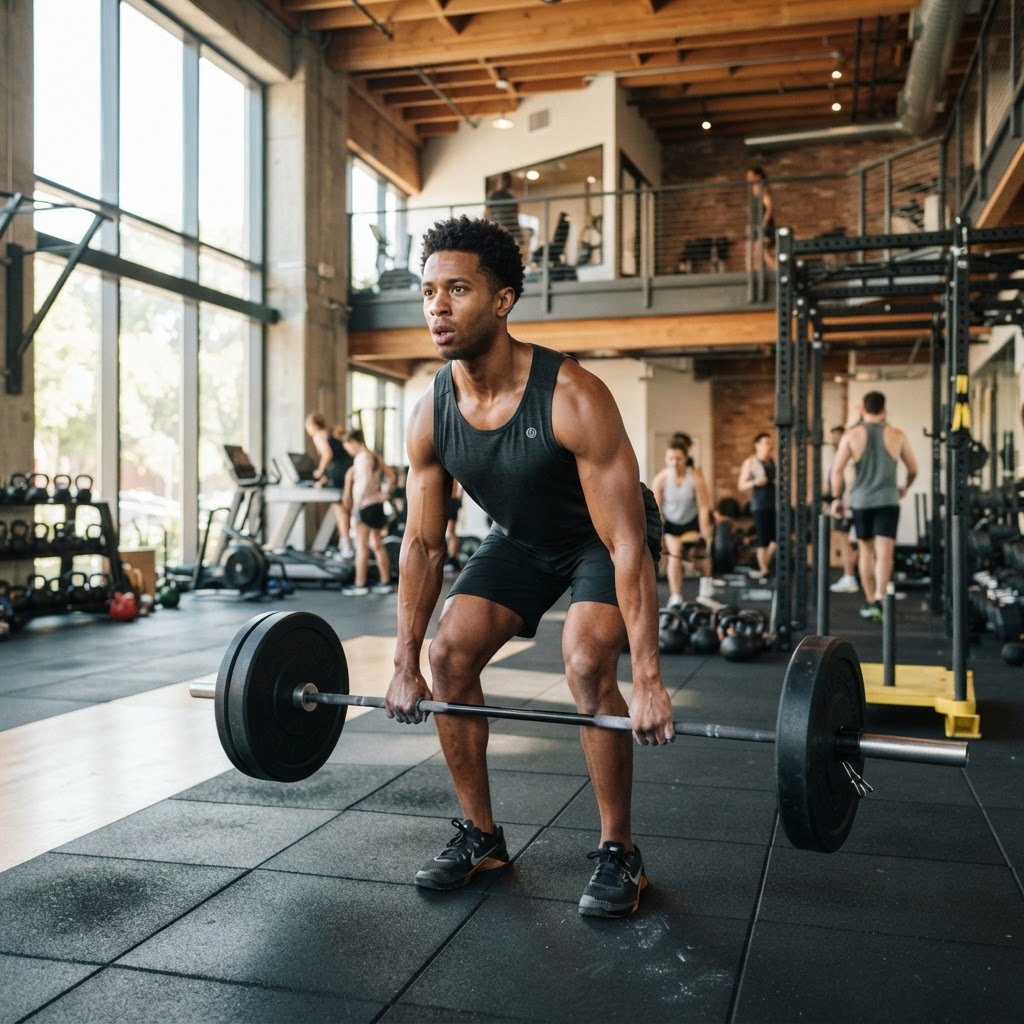
- Prioritize Compound Movements: The research consistently shows that the magnitude of the hormonal response is tied to the size of the muscle groups being worked. Focus your sessions on movements like deadlifts, squats, and chest presses. These 'big' lifts provide the greatest systemic stimulus.
- Manage Your Volume: High-volume resistance training—meaning a sufficient number of sets and repetitions—is the primary driver for positive hormonal adaptations. If you are unsure how to structure your volume, a 1-to-1 personal training session can help you design a program that balances intensity with your recovery capacity.
- Avoid Over-Endurance: While cardio is vital for heart health, the literature (including recent systematic reviews in the Journal of Men's Health) suggests that long-term, exhaustive endurance training can sometimes inhibit testosterone generation. If your goal is muscle growth and metabolic health, ensure your resistance training remains the cornerstone of your routine.
The Bigger Picture
It is easy to get caught up in the 'hacks' of fitness, but remember that the most effective tool you have is your presence in the gym. Whether you are here to lose body fat or build strength, the consistency of your resistance training is what truly moves the needle.
At our gym, we believe in keeping things simple and effective. You don't need complex protocols to see results. By focusing on compound lifts, maintaining a consistent training frequency, and listening to your body, you are already doing the most important work. If you feel like your current routine has plateaued, consider booking a 1-to-1 personal training session to review your form and volume. Sometimes, a small adjustment to your tempo or your range of motion is all it takes to spark a new wave of progress.