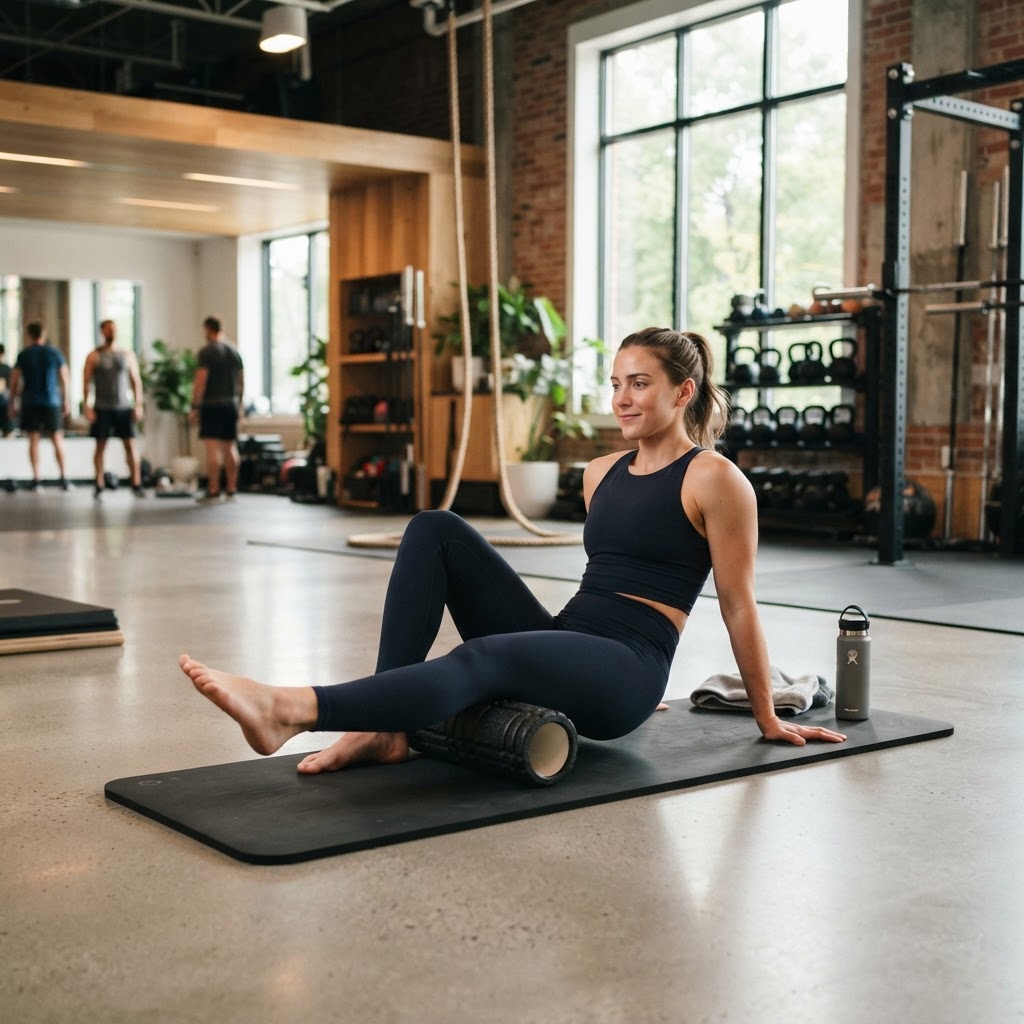
The Invisible Half of Your Training
At Clarence Park Health Suite, we often see members pushing themselves to their limits. You track your sets, you monitor your protein intake, and you show up consistently. But there is one piece of equipment that most people neglect, and it is not found on our gym floor: your pillow.
While we love seeing you in the gym, the actual physiological adaptation—the process where you get stronger, leaner, and fitter—doesn't happen while you are lifting. It happens while you are asleep. If you are training hard but ignoring your sleep hygiene, you are essentially building a house and then knocking down the walls every night.
The 18% Penalty
Recent research has quantified exactly how much sleep impacts your results. A landmark study by Lamon et al. (2021) published in Physiological Reports revealed a startling statistic: just one night of poor sleep can reduce muscle protein synthesis (MPS) by approximately 18%.
Think about that for a moment. If you spend an hour in the gym working to stimulate muscle growth, but your sleep quality is poor, you are effectively sabotaging nearly a fifth of the potential gains from that session. Further research, such as the work by Nedeltcheva et al. (2010), highlights that when individuals are in a caloric deficit—often the case for those looking to lose body fat—those who sleep only 5.5 hours per night lose significantly more muscle mass compared to those who get adequate rest.
Why Sleep Is the Ultimate Performance Enhancer
Dr. Matthew Walker, a leading expert in sleep science, famously calls sleep the "greatest legal performance-enhancing drug." When you enter deep sleep, your body undergoes a complex series of hormonal shifts. It releases growth hormones and balances testosterone and IGF-1 levels, all of which are critical for repairing the micro-tears created during resistance training.
Without this window of recovery, your body remains in a state of elevated cortisol, which promotes muscle breakdown rather than repair. This is why, at our gym, we encourage our members to view sleep not as "downtime," but as an active part of their training program.
Actionable Steps for Better Recovery
You don't need to be a professional athlete to optimize your sleep. Here are three practical ways to close the "Sleep-Synthesis Gap":
- The 7-9 Hour Floor: Aim for a consistent 7 to 9 hours of sleep. Research consistently shows that habitual short sleep blunts strength and hypertrophy adaptations. If you are currently getting 6 hours, try adding 15 minutes each week until you hit that 7-hour mark.
- Consistency Over Intensity: Your body thrives on rhythm. Going to bed and waking up at similar times helps regulate your internal circadian clock, which is linked to how efficiently your muscles regenerate.
- Cool Down Your Environment: Your body needs to drop its core temperature to enter deep sleep. Keep your bedroom cool and avoid heavy meals or intense blue light exposure (like scrolling on your phone) for at least 30 minutes before bed.
A Friendly Reminder
Whether you are here for individual gym access or working with one of our personal trainers to refine your technique, remember that your progress is a 24-hour cycle. We provide the environment for the stimulus, but you provide the environment for the growth.
If you feel like your recovery is stalling despite your best efforts in the gym, it might be time to look at your sleep habits before you look at your training split. Treat your sleep with the same discipline you bring to your squats and deadlifts, and you will see the difference in your results.