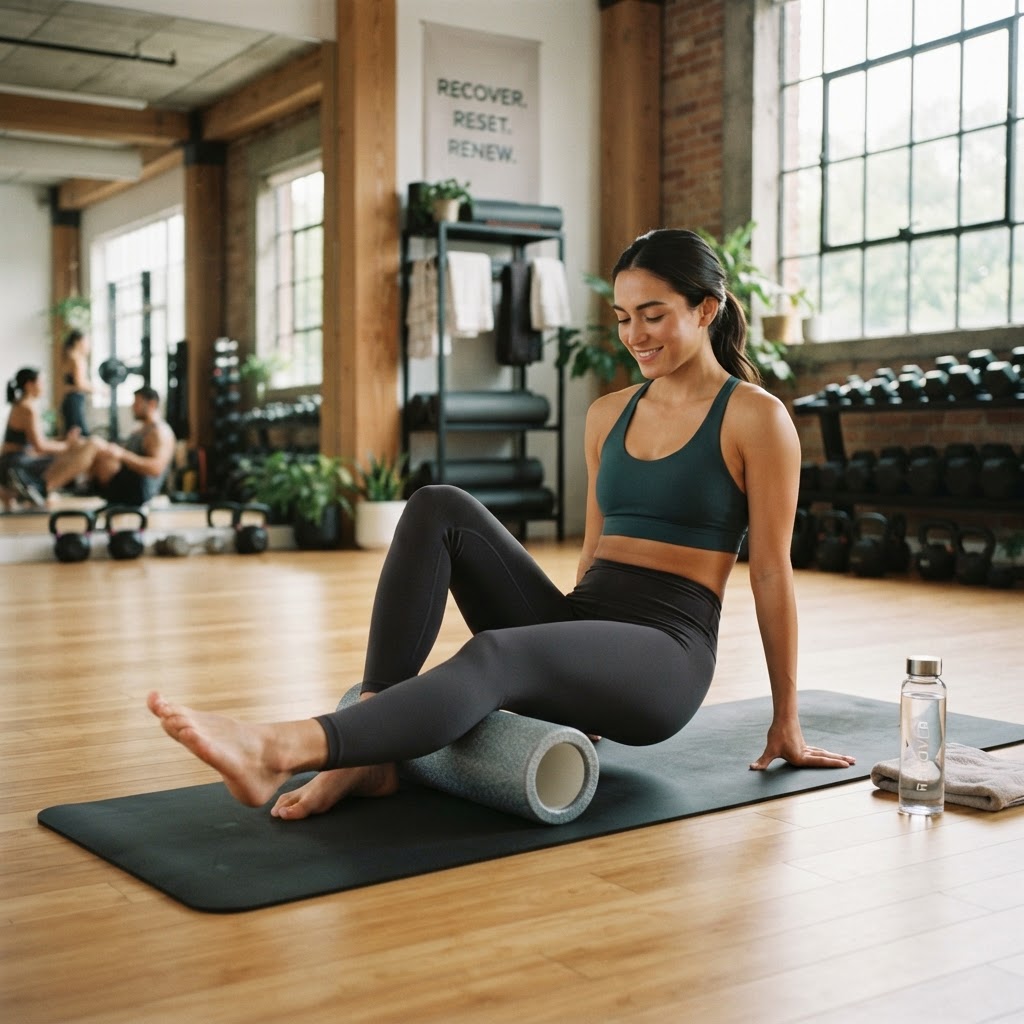
The Hidden Switch for Recovery
At Clarence Park Health Suite, we often see members finish their final set of squats or their last interval on the treadmill and immediately head for the door. While we love the energy, you might be missing a golden opportunity to kickstart your recovery before you even leave the gym floor. The secret isn't a fancy supplement or an expensive gadget; it is your breath.
Understanding the Autonomic Tug-of-War
When you train, your body enters a 'fight or flight' state, governed by the sympathetic nervous system (SNS). This is great for pushing through a heavy lift, but it is the opposite of what you need for muscle repair and fat loss. To recover, you need to shift into the 'rest and digest' state, controlled by the parasympathetic nervous system (PNS).
Research published in Scientific Reports (2026) highlights that efficient recovery depends on the rapid reactivation of this parasympathetic system. When you finish a workout, your body is still buzzing with adrenaline. By using specific breathing techniques, you can manually signal to your brain that the 'threat' of the workout is over, allowing your heart rate to drop and your body to begin the repair process immediately.
The Power of Diaphragmatic Breathing
Many of us are 'chest breathers,' especially when we are tired. However, diaphragmatic breathing—often called belly breathing—is a proven tool for down-regulating the nervous system. A study by Martarelli and Cocchio (2010) found that this type of breathing can reduce exercise-induced oxidative stress and help manage cortisol levels, which is vital for anyone looking to build muscle or improve body composition.
A Practical Protocol for Your Next Session
You don't need to spend an hour on this. Even three to five minutes of focused breathing immediately after your workout can make a difference. Here is a simple, actionable protocol you can use right here at the gym:
- Find a quiet corner: Once you have finished your final set, take a seat or stand comfortably.
- The 4-7-8 Technique: Inhale through your nose for a count of 4, hold your breath for a count of 7, and exhale slowly through pursed lips for a count of 8.
- Focus on the belly: Place one hand on your chest and one on your stomach. Ensure only the hand on your stomach moves. This ensures you are using your diaphragm, not your upper chest muscles.
- Consistency over intensity: You don't need to force the breath. The goal is to calm the system, not to create more stress.
Why It Matters for Your Results
Whether you are working with one of our personal trainers or enjoying individual gym access, your results are built in the recovery phase, not just during the workout. By accelerating your parasympathetic reactivation, you are essentially shortening the time your body spends in a catabolic (breakdown) state and lengthening the time it spends in an anabolic (building) state.
If you find that you are consistently feeling 'wired' after your sessions, or if you feel like your progress has plateaued, try adding this 5-minute 'vagal shift' to the end of your next visit. It is a small, friendly change that can have a significant impact on how you feel the next day. If you want to learn more about how to integrate recovery strategies into your specific training plan, feel free to chat with our team about our 1-to-1 personal training services.