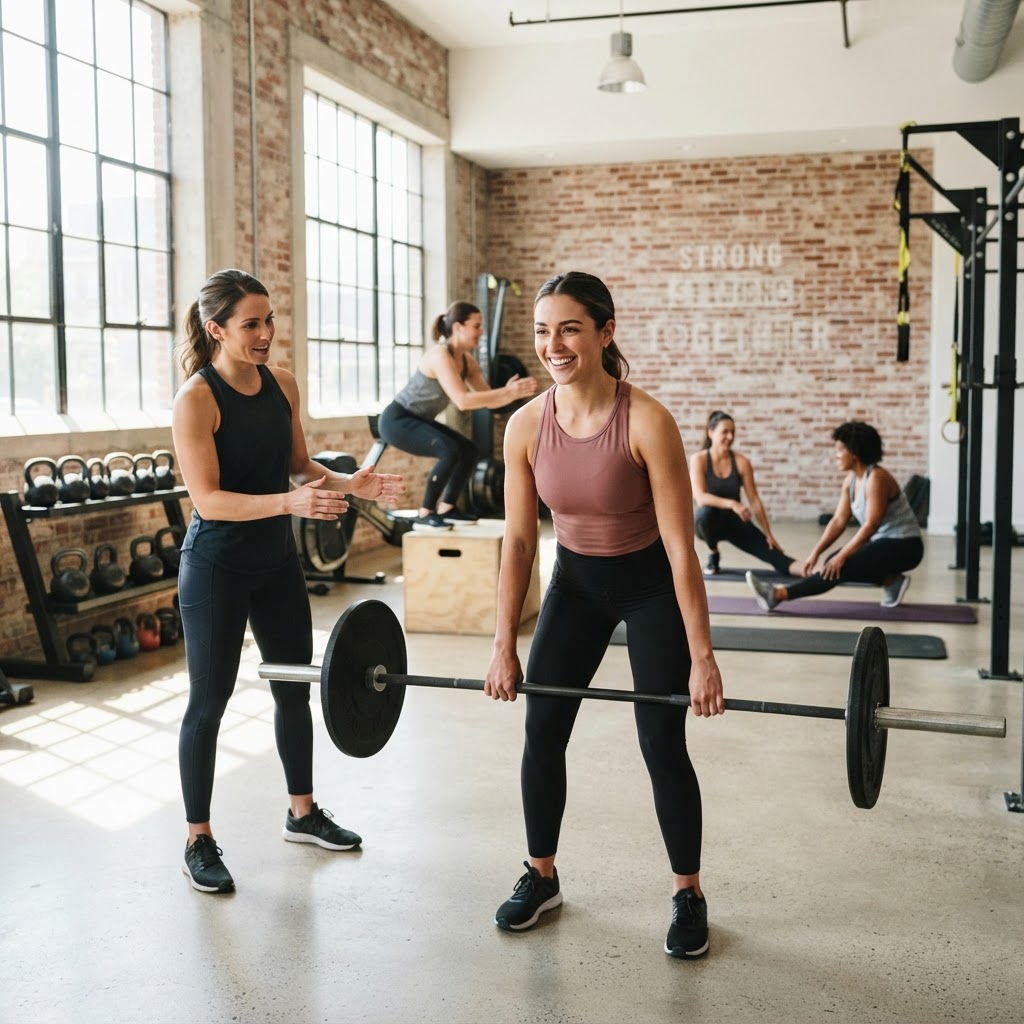
The Myth of Cycle-Based Training
If you have spent any time on social media, you have likely seen influencers suggesting that you should drastically alter your gym routine based on the phase of your menstrual cycle. The theory suggests that you should lift heavy during your follicular phase and switch to lighter, 'easier' work during your luteal phase. However, a 2026 study published in Sports Medicine suggests that this approach may be more hype than science [2].
What the Science Says
Researchers investigated how menstrual cycle phases affect resistance training performance, specifically looking at peak mean velocity in exercises like the bench press and deadlift. The findings were clear: while there were some statistically significant fluctuations in performance, they were of a 'trivial to small magnitude' [2]. In practical terms, these minor variations are unlikely to be meaningful for your actual progress in the gym.
Furthermore, a 2026 review on menstrual-cycle phase-based periodization concluded that the evidence base for changing your training based on your cycle is 'discordant' and that the recommendation is more popular than the current evidence warrants [6].
What Actually Drives Your Gains
If your cycle isn't the primary driver of your performance, what is? The same study found that your motivation to train was a strong, independent predictor of performance [2]. When you feel ready to tackle a session, your output is naturally higher.
Additionally, a massive 2026 meta-analysis of 126 studies involving over 4,000 women confirmed that resistance training yields significant improvements in strength and body composition across the entire female lifespan, regardless of hormonal status [1, 3]. Whether you are pre- or post-menopausal, your body is highly capable of adapting to consistent, progressive resistance training [1].
Practical Takeaways for Your Training
At Clarence Park Health Suite, we believe in keeping things simple and effective. Here is how you can apply this research to your own training:
- Prioritize Consistency: Instead of trying to time your workouts to your cycle, focus on a consistent schedule of 2–4 sessions per week [1]. This frequency is highly effective for building strength and reducing fat mass [1].
- Monitor Your Own Symptoms: While the cycle itself may not dictate your performance, individual symptoms like pain or fatigue can [2]. If you are having a particularly difficult day, it is perfectly fine to adjust your intensity or volume based on how you feel in the moment, rather than following a rigid, pre-planned cycle schedule [2, 7].
- Focus on Effort: Since motivation is a key predictor of performance, choose exercises you enjoy and that make you feel strong [2]. If you find yourself struggling to stay on track, consider booking a 1-to-1 session with a personal trainer. A trainer can help you adjust your program to match your current energy levels while ensuring you continue to hit your long-term goals.
- Don't Fear the Heavy Stuff: Women do not need to stick to 'light weights and high reps' [7]. You respond just as well to traditional strength and hypertrophy ranges (6–12 reps) as anyone else [7].
The Bottom Line
Your training should be about what works for your lifestyle and your body's unique feedback. Don't let complex, unproven theories about cycle-based periodization complicate your gym time. Whether you are looking to lose body fat, build muscle, or simply feel better, the most effective strategy is to show up, stay motivated, and train with intent. If you need help building a program that fits your individual needs, our personal training services are here to help you navigate your fitness journey with confidence.